
Plenty of research shows that MBA graduates tend to earn noticeably higher salaries than professionals with similar experience but without the degree. A significant number of CEOs leading Fortune 500 companies hold an MBA, which is hardly accidental. It reflects how much leading organizations value the structured training, strategic mindset, and leadership development that MBA programs are designed to deliver.
This article explores how an MBA transforms not just your career trajectory but your entire way of thinking. You will learn about the skills that set top-tier leaders apart and the networking advantages that only a high-level degree can provide. By the end of this piece, you will know exactly why an MBA is the single smartest investment a future leader can make in their professional journey.
Why Future Leaders Are Choosing an MBA: The Data Does Not Lie
Top companies are clearly actively hiring from MBA pools. Although this degree is often linked to consulting and finance, the reality is far more expansive. In fact, from AI strategy to green finance, the career opportunities for MBA degree holders are now greater and better paid than ever before. Out here in tech and health care, MBAs are turning heads. Startups line up for them just as fast as nonprofit groups do – complex challenges need sharp minds that can scale with change. If you want to be a serious candidate for leadership, this data makes a compelling case for you to think about taking this route.
The Leadership Skills an MBA Actually Builds
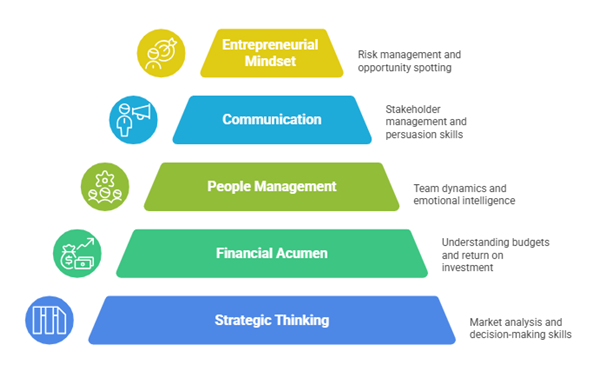
This is the degree’s central tenet. Key leadership skills that you can’t learn on the job through trial and error alone are developed through an MBA. Any successful executive career is built on these abilities.
Strategic Thinking
You will gain knowledge of market analysis and trend forecasting. Real-world case studies are used to practice making decisions under pressure. You are compelled to view a company from the CEO’s point of view, which alters your perception of every issue.
Financial Acumen
It’s not just the accounting department that needs to understand profit and loss statements. Understanding budgets and return on investment is essential for any great leader. Having an MBA guarantees that you possess the financial literacy necessary to communicate effectively in the business world.
People Management and Emotional Intelligence
Team dynamics and organizational behavior are covered in MBA program modules. Starting, you’ll grow your ability to understand emotions while picking up skills for handling discussions. To guide people with different backgrounds, deep insight into what drives individuals is key. This kind of awareness doesn’t appear overnight. Instead, it builds through practice and real moments of connection. Without grasping these inner forces, leadership often falls short.
Communication and Executive Presence
Stakeholder management and presentations will be thoroughly practiced. It is possible to learn and hone the art of persuasion. An MBA allows you to hone your executive presence until it comes naturally to you.
Entrepreneurial Mindset
In GLcampus, you are taught to think like a founder, whether you are starting a business or spearheading innovation within a big organization. You gain knowledge about how to properly manage risks and spot opportunities. To make sure the lessons are applicable and not merely theoretical, these programs employ real-world business challenges and live simulations.
The Power of the MBA Network: Your Hidden Leadership Advantage
The value of the people you will meet in top networking events in your education is often underestimated by many. An MBA program is a room of future CEOs and leaders in various industries. This is a network that provides access to opportunities that cannot be achieved by skills alone. You will have access to a network of peers who will go on to run some of the largest corporations in the world.
Another advantage is the mentorship by professors who are former executives. You will also have direct access to recruiters in your industry who target your school specifically. These are professional relationships that will last a lifetime. The global perspective is also important. Learning alongside people from different countries provides a cultural intelligence that is vital in a global economy.
Full Time, Part Time, or Online MBA: Which Path Is Right for a Future Leader
One of the most popular arguments is that students cannot afford to leave their employment to pursue further education. Now here’s something useful – plenty of options exist, each shaped for a particular way of living. Pick one today that lines up with how you live, yet still works when life shifts down the road.
- A full-time MBA feels like stepping back into campus life, perfect for anyone looking to shift directions entirely. While some might stick close to their current path, others find it opens doors they never expected. Not everyone needs this kind of reset, yet for many, the structure makes a difference. It’s less about climbing faster and more about moving sideways – sometimes even backwards – to reach something new. Time away from work helps absorb ideas without distraction, letting lessons sink in deeper than usual.
- Part-time or Executive MBAs enable you to earn a living while you learn. This is perfect for those who are already on a fast track to management and wish to speed up their career development without sacrificing their income.
- Now more folks choose online MBAs because they fit busy lives. For global learners juggling work or family, these programs leave room to keep up with life while studying. Some need that balance just to make progress
How to Choose the Right MBA Program to Maximize Your Potential
Global Accreditation
Look for signs of quality such as AACSB or EQUIS accreditation. This ensures that the curriculum is of international excellence standards.
Specializations and Electives
Curriculum first – does it match where you want to go? Leadership paths or starting something of your own, check if those options exist.
Faculty and Industry Connections
Look into whether instructors work professionally outside teaching. Schools tied closely to businesses often open more doors through connections and job placements.
Career Services and Placement
Review the placement record of the school. A good program should actively connect students with top employers and provide career coaching.
Reputation and Culture
Even if rankings aren’t everything, a program’s reputation might shape what hiring managers think. Step onto the grounds, talk with former students, and see how varied the group feels up close.
Real Stories: How an MBA Launched These Leaders to the Top
One can give the example of a mid-level marketing manager who felt he or she had plateaued in his or her job. After earning an MBA, he or she had the strategic thinking necessary to become a Vice President in just two years, with his or her salary doubling and influence on the organization multiplying exponentially.
The second example can be given of a nurse seeking to transition into healthcare administration. After earning an MBA, she or he has the financial and management expertise necessary to become a director of a large healthcare organization. In fact, even software engineers can utilize the MBA degree to transition into entrepreneurship. One such engineer utilized the MBA network to find a co-founder and raise millions in venture capital for his or her tech startup.
Conclusion and Call to Action
It is not something you are born with. It is something you develop through hard work and proper education. An MBA is one of the most defined ways to fast-track yourself to the top of the corporate ladder. We have discussed the necessary skills you will need to develop and the network you will have access to through such a degree. You have learned how to select the right path for your current situation.
The beginning of your leadership story begins with one decision. Driven by purpose, your path unfolds through proven steps. Peek at leading MBA options now – this moment shapes what comes next. Reaching higher begins before you know it.
Frequently Asked Questions
1. Is an MBA degree really necessary to become a leader in business
Although not a requirement, an MBA can significantly speed up your way to the top. It provides you with strategic and financial skills that would normally take decades to accumulate on the job ladder. Research has consistently shown that you reach the top more quickly than your peers without an MBA. It’s a big competitive advantage for ambitious individuals.
2. What leadership skills does an MBA degree teach you
A good MBA equips you with a full toolkit, including strategic thinking and financial understanding. Team management and communication with executives are included, too. Case studies are used to make these skills “real-world” applicable. Students also gain emotional intelligence through diversity exposure.
3. Can I pursue an MBA while working full-time
This is what many successful leaders have done. Part-time and Executive programs are designed for working professionals. Self-paced lessons in digital courses let people move at their own speed. What matters most? Matching the structure to how you learn, plus what your job allows.
4. How long does it take to complete an MBA program
A full-time program typically takes one to two years. Part-time options generally run between two and three years because of the reduced weekly commitment. Online programs vary widely, but some accelerated formats can be completed in as little as twelve to eighteen months.
5. Which MBA specialization is best for aspiring leaders
Specializations in General Management or Strategy are likely to be the most valuable for those aiming to reach the top of their industry. The best specializations will vary depending on your target industry. For example, tech industry leaders may prefer specializations in innovation, while others may prefer specializations in entrepreneurship to run their own businesses.