

Working with young children is a deeply fulfilling and impactful career choice. The universities in the UK offers recognized pathways for individuals aspiring to excel in teaching, childcare, nursery leadership, and early childhood instruction.
This GL Campus guide explains that whether you prefer campus learning or digital options, understanding early childhood education in the UK qualifications helps you select a route aligned with your professional ambitions.
What Is Early Childhood Education UK?
Early childhood education in the UK covers learning, care, and development for children from birth to age eight. It focuses on building fundamental competencies during crucial developmental years.

Key areas of child development include:
- Early Learning: Developing foundational literacy, numeracy, and problem-solving skills through structured play.
- Social Development: Encouraging positive peer interactions, cooperation, and social awareness.
- Communication Skills: Expanding vocabulary, active listening, and early language comprehension.
- Emotional Development: Building self-regulation, confidence, and resilience.
- Physical Development: Enhancing motor skills, coordination, and healthy habits.
Qualified early years professionals guide children through key milestones, ensuring a smooth transition into primary education.
7 Early Childhood Education UK Study Paths to Consider
Prospective students can choose from several qualification routes tailored to different experience levels and career goals.
1. Early Years Education Qualifications
These foundational qualifications introduce essential concepts for working with young children.
- Core Content: Covers child development stages, learning through play, child safety, and wellbeing.
- Best For: Beginners seeking foundational entry-level knowledge in early years care.
2. Early Years Practitioner Programs
Practitioner courses focus heavily on workplace skills and practical application in real-world childcare settings.
- Core Content: Hands-on care, activity planning, workplace health, and observational assessment.
- Best For: Learners who want direct, practical experience inside nursery environments.
3. Teaching Diploma UK
A teaching diploma UK pathway provides specialized pedagogical knowledge for teaching environments.
- Core Content: Instructional design, classroom dynamics, assessment methods, and inclusive learning.
- Best For: Individuals aiming to develop teaching methodologies. Always verify if your specific diploma awards Qualified Teacher Status (QTS) or equivalent local credentials.
4. Early Childhood Education Degrees
Bachelor’s and master’s degree programs offer comprehensive theoretical and practical knowledge.
- Core Content: Educational psychology, curriculum design, child protection policies, and early learning research.
- Best For: Students targeting leadership, policy, or advanced teaching roles.
5. Early Years Teacher Training
Dedicated teacher training routes prepare candidates for specialist early years teaching positions.
- Core Content: Early Years Foundation Stage (EYFS) standards, clinical placements, and professional mentoring.
- Best For: Graduates seeking recognized Early Years Teacher Status (EYTS).
6. Online Early Childhood Education Courses
Online learning provides flexibility for working professionals and international students managing busy schedules.
- Core Content: Digital coursework, online lectures, and remote assessment modules.
- Best For: Students balancing work or family commitments while studying remotely.
7. Early Childhood Education Certifications
Short certification programs target specific skills or emerging topics within the early years sector.
- Core Content: Targeted topics like special educational needs (SEN), play therapy, or pediatric first aid.
- Best For: Existing practitioners wanting targeted skill upgrades.
Career Opportunities After Early Childhood Education UK
Completing an early childhood education UK qualification opens pathways across the education and childcare sectors.
Potential career paths include:
- Nursery Practitioner or Early Years Educator
- Teaching Assistant in primary schools
- Nursery Manager or Childcare Supervisor
- Early Years Support Worker or Community Educator
- Education Administrator or Curriculum Assistant
Specific roles, particularly qualified primary school teaching, may require additional professional registration or QTS.
- Can You Study Early Childhood Education UK Online?
Yes, distance learning is widely available for early childhood studies. Online options allow international and domestic students to earn qualifications without relocating.
Benefits of Online Study
- Flexibility: Study at your own speed alongside work obligations.
- Accessibility: Access UK course materials from anywhere worldwide.
- Cost Savings: Reduce expenses related to travel, housing, and commuting.
What to Check Before Enrolling
- Awarding Body: Ensure the qualification is issued by a recognized educational body.
- Level and Accreditation: Confirm the qualification level fits your career needs.
- Practical Placements: Verify whether the course requires in-person practical placements or local workplace observations.
How Much Does Early Childhood Education Study Cost?
Educational costs vary significantly depending on the study level, provider, and residency status:
- Short Certificates & Diplomas: Lower fees, ranging from a few hundred to a few thousand pounds.
- Undergraduate & Postgraduate Degrees: University tuition varies between home and international student rates.
- Additional Costs: Budget for textbooks, background checks (like DBS checks in the UK), and placement travel.
Review fee structures directly on official course provider websites before applying.
How to Choose the Right Early Childhood Education UK Course
Selecting the ideal program requires aligning your current qualifications with long-term goals.
Check the Qualification Level
Ensure the level (e.g., Level 3 Diploma vs. Bachelor’s Degree) matches your experience and target job requirements.
Verify Recognition
Check if the qualification is recognized by employers or official education bodies in your home or working country.
Compare Study Formats
Decide whether full-time classroom attendance, blended learning, or pure online delivery suits your routine best.
Consider Career Progression
Select courses that offer clear academic or professional progression routes into advanced roles.
Early Childhood Education UK vs Teaching Diploma UK
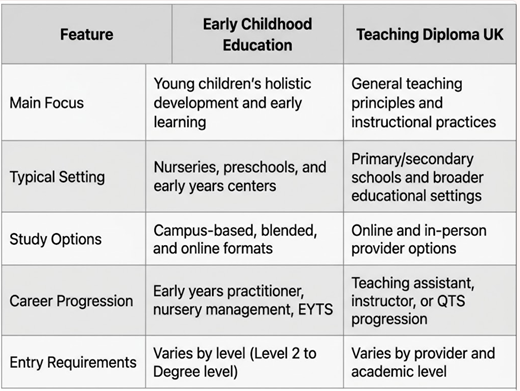
While both fields complement each other, choosing between them depends on whether you prefer early years developmental care or broader instructional teaching.
Steps to Start Your UK Early Childhood Education Journey
- Define Your Goals: Identify the specific job role or qualification level you want to reach.
- Select a Qualification Level: Match course levels to your existing academic background.
- Research Providers: Compare UK universities, colleges, and accredited online institutions.
- Review Entry Criteria: Verify academic qualifications, English proficiency, and experience requirements.
- Confirm Placements: Check if the course requires local practical training or workplace logging.
- Prepare Materials: Gather academic transcripts, references, personal statements, and identification.
- Submit Applications: Apply before published course deadlines to secure your position.
Final Thoughts on Early Childhood Education UK
Investing in early childhood education UK training provides foundational skills to support young learners during critical developmental years. Whether you aim to work in nurseries, support classroom teaching, or manage early years facilities, selecting an accredited course ensures strong career progression. Research qualification levels, confirm course recognition, and submit your application early to begin your educational journey.
FAQs About Early Childhood Education UK
1. What is early childhood education in the UK?
Early childhood education in the UK focuses on learning, care, and developmental support for children from birth to age eight. Programs cover early learning standards, child psychology, health, safeguarding, and play-based instruction tailored to young learners.
2. Can I study early childhood education online in the UK?
Yes, many UK providers offer online or blended learning programs. Online courses provide flexible study schedules, but students should verify if practical placement hours are required to earn the full credential.
3. Is a teaching diploma UK qualification suitable for early years careers?
A teaching diploma UK qualification can support educational roles, but specific early years positions may require dedicated early childhood credentials or Early Years Teacher Status (EYTS). Always check local employer requirements.
4. What jobs can I get after studying early childhood education?
Graduates can work as nursery practitioners, early years educators, teaching assistants, childcare coordinators, or early childhood administrators. Advanced roles or primary school teaching may require QTS or further postgraduate study.
5. How do I choose the right early childhood education course?
Evaluate your current qualifications, desired career outcome, budget, and preferred study format. Ensure the course provider is recognized and offers the correct level of qualification for your career path.




