

Pursuing a degree in Europe, the Global MBA Europe program is a strategic investment for professionals aiming to elevate their leadership capabilities, expand their strategic mindset, and navigate complex international markets. Europe brings together world-class academic institutions, multinational corporate headquarters, thriving innovation hubs, and highly diverse student cohorts.
This comprehensive GL Campus guide details curriculum structures, evaluation criteria, overall costs, admission benchmarks, and potential career paths to help you make an informed decision.
What Is a Global MBA Europe Program?
A global MBA Europe program is an advanced postgraduate degree designed to prepare business leaders for cross-border management and global executive roles. Unlike traditional domestic MBA degrees, a European global MBA explicitly embeds international commerce, cross-cultural team management, and transnational business strategy into every core module.

While core business fundamentals remain central, these programs emphasize:
- Global Strategy: Formulating business models across differing regulatory environments.
- International Finance: Managing currency exposure, global capital markets, and international risk.
- Cross-Cultural Management: Leading diverse teams across differing cultural and operational norms.
- Global Marketing: Adapting product positioning, branding, and messaging to local market behaviors.
- Executive Leadership: Developing authentic leadership, crisis communication, and corporate governance skills.
- International Business Environments: Analyzing trade agreements, geopolitical impacts, and macroeconomic trends.
Programs across Europe differ significantly in curriculum focus, study formats, duration, tuition fees, and admission standards. Rather than assuming all European business programs deliver identical outcomes, prospective candidates should evaluate each program’s specific strengths.
Why Choose a Global MBA Europe Program?
Europe remains one of the most compelling destinations for candidates seeking a globally focused management education. The continent offers a unique blend of established economic powerhouses, emerging tech ecosystems, and unmatched cultural diversity.
- International Business Exposure: Proximity to major financial centers (London, Frankfurt, Zurich) and corporate headquarters provides real-world business context.
- Diverse Professional Networks: European cohorts typically draw candidates from over 30 to 50 distinct nationalities, fostering rich peer-to-peer learning.
- Multinational Industry Access: Strong relationships between business schools and global corporations facilitate direct access to international business leaders.
- Rigorous Academic Standards: Programs are designed around cutting-edge research, case-study methodologies, and hands-on consulting projects.
- Multicultural and Regional Mobility: Living and studying in Europe offers unique cultural immersive experiences across interconnected economic markets.
The value of an MBA depends on your specific career objectives, current professional background, and the alignment of your chosen institution with your target industry.
7 Powerful Benefits of a Global MBA in Europe
Enrolling in a global MBA Europe route offers distinct advantages for ambitious professionals seeking long-term career transformation:
1. Develop Global Leadership Skills
Learn to manage cross-functional teams, make high-stakes strategic decisions, and drive organizational change within complex, multi-jurisdictional operating environments.
2. Expand Your Professional Network
Engage with a high-caliber network of global peers, alumni, faculty members, corporate guest speakers, and industry executives who can open doors throughout your career.
3. Understand International Markets
Gain a nuanced understanding of how global economies interact, allowing you to identify emerging market trends, navigate regulatory landscapes, and assess cross-border risks.
4. Strengthen Strategic Thinking
Sharpen your analytical capabilities, competitive analysis techniques, and problem-solving methodologies to tackle high-level corporate challenges with confidence.
5. Gain Multicultural Experience
Collaborate daily with professionals from varied background perspectives, sharpening your emotional intelligence, adaptability, and cross-cultural communication abilities.
6. Explore Global Career Opportunities
Equip yourself with portable, highly valued leadership skills recognized by multinational corporations, international consultancies, and financial institutions worldwide.
7. Build Long-Term Professional Confidence
Mastering executive-level concepts alongside global peers fosters the strategic confidence necessary to step into senior management and C-suite roles.
How to Identify the Best Business Schools Europe Has to Offer
Selecting among the best business schools Europe hosts requires evaluating more than just annual headline rankings. Prospective students should use a balanced decision-making framework to assess long-term fit:
- Accreditation
Ensure your prospective institution holds international “Triple Crown” accreditation from the three main bodies: AACSB (US), AMBA (UK), and EQUIS (EU). Triple accreditation serves as a benchmark for academic rigor, faculty quality, and global degree recognition.
- Faculty and Curriculum
Investigate faculty research credentials and industry involvement. Ensure the curriculum offers specialized electives, real-world consulting modules, or concentration tracks that match your target career trajectory.
- Alumni Network
Analyze the strength, geographical spread, and industry presence of the school’s alumni association. A responsive, active alumni network is an invaluable asset for lifelong career growth.
- Employer Connections
Review corporate partnerships, campus recruitment statistics, internship placements, and career center responsiveness. Strong employer relationships indicate high demand for the institution’s graduates.
International Student Experience
Evaluate cohort diversity, language support services, visa assistance, study-abroad exchange opportunities, and overall student integration initiatives.
What Do You Study in a Global MBA Europe Program?
While specific module structures vary by university, an elite global MBA Europe curriculum covers foundational and advanced strategic disciplines:
- Global Business Strategy
Focuses on competitive positioning, corporate portfolio management, foreign market entry strategies, and sustainable growth planning in dynamic international markets.
- International Finance
Covers corporate finance principles, global investment strategies, valuation techniques, foreign exchange management, and capital structure optimization.
- Global Marketing
Explores market entry strategies, international brand management, consumer behavior analytics, digital marketing channels, and localized campaign execution.
- Leadership and Organizational Management
Examines organizational behavior, executive leadership styles, talent management, negotiation tactics, business ethics, and corporate culture alignment.
- Entrepreneurship and Innovation
Teaches business plan creation, venture capital funding, corporate intrapreneurship, technology commercialization, and agile business model adaptation.
Global MBA Europe Costs and ROI
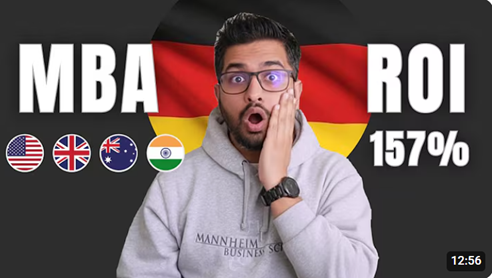
Calculating the real value of an MBA requires analyzing both total upfront capital expenditure and long-term career returns.
Understanding Total Costs
Prospective candidates should budget for more than just advertised tuition fees:
- Tuition Fees: Ranging from €35,000 for mid-tier institutions to €95,000+ at top-tier European business schools.
- Living & Accommodation: Expenses vary significantly based on city selection (e.g., Paris or London vs. secondary university towns).
- Travel and Field Trips: Overseas study tours, international exchanges, and networking trips.
- Opportunity Cost: The lost income or reduced earnings incurred during full-time study periods.
How to Evaluate MBA ROI
When evaluating Return on Investment (ROI), consider quantitative factors like post-graduation compensation, alongside qualitative gains like expanded professional networks, functional mobility, leadership acceleration, and long-term career durability. ROI varies based on prior professional experience, school reputation, geographic location, chosen industry, and personal initiative.
Who Should Consider a Global MBA Europe?
A European global MBA is tailored for driven professionals at specific pivot points in their careers:
Experienced Professionals
Mid-level managers looking to break through career plateaus, gain broader operational oversight, and transition into senior executive roles.
Aspiring Executives
Leaders seeking to sharpen their strategic management capabilities, financial acumen, and corporate governance expertise for C-suite preparation.
Entrepreneurs
Founders and business owners aiming to expand their enterprises into foreign markets, secure international funding, or build strategic global partnerships.
Career Switchers
Professionals aiming to transition into new functional roles (e.g., engineer to management consultant), new industries (e.g., tech to venture capital), or new geographic markets.
Suitability depends on your current career stage, professional achievements, and alignment with institutional entry standards.
Admission Requirements for a Global MBA Europe
Admission into a top-tier global MBA Europe program is selective and holistic. Common application components include:
- Undergraduate Degree: A recognized bachelor’s degree or equivalent academic credential.
- Professional Experience: Most top-tier European programs require a minimum of 3 to 5 years of full-time post-graduation work experience.
- Standardized Testing: GMAT, GRE, or institution-specific admissions tests (waivers may apply based on career seniority or academic history).
- English Proficiency: Proof of language proficiency via IELTS, TOEFL, or prior instruction in English.
- Professional References: Recommendation letters evaluating leadership potential, workplace impact, and interpersonal maturity.
- Essays and Interviews: Personal statements detailing career goals, leadership philosophy, and fit with the program, followed by formal admissions interviews.
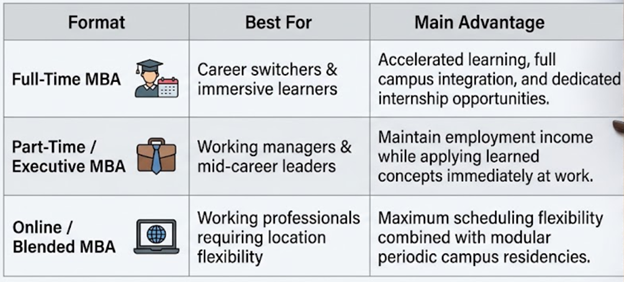
Full-Time vs. Part-Time vs. Online Global MBA
Selecting the right delivery format ensures your studies align with your lifestyle, financial commitments, and professional goals:
How to Choose the Right Global MBA Europe Program
To select the ideal program, follow this practical evaluation framework:
- Define Your Career Goal: Clarify whether your priority is industry switching, corporate ladder progression, international relocation, or founding a startup.
- Compare Curricula: Review elective choices, specialized tracks, experiential consulting projects, and international exchanges.
- Research Career Outcomes: Review accredited employment reports to evaluate graduate placement rates, top hiring companies, and functional role breakdowns.
- Investigate Alumni Networks: Connect with current students and alumni on LinkedIn to gauge network responsiveness and career mobility.
- Calculate Total Investment: Weigh overall tuition, living costs, and potential lost income against realistic post-graduation career opportunities.
Career Opportunities After a Global MBA Europe
Graduating from a global MBA Europe program opens potential doors across high-impact sectors and strategic roles worldwide:
- Management Consulting: Strategy consultant, practice manager, or operational advisor.
- Investment Banking & Private Equity: Investment associate, portfolio manager, or corporate finance advisor.
- Technology & Innovation: Product manager, strategy lead, or operations director in scale-ups and tech giants.
- Corporate Strategy & Operations: Chief of staff, strategy director, or international expansion manager.
- Entrepreneurship: Startup founder, corporate intrapreneur, or venture builder.
While an MBA enhances your resume, ultimate career progression depends on your underlying track record, networking efforts, industry demand, and interview performance.
Is a Global MBA Europe Worth the Investment?
For professionals seeking global perspective, advanced managerial skills, and access to international networks, a European global MBA represents a high-value strategic decision. However, because the financial and time investments are substantial, candidates must carefully evaluate school accreditation, faculty quality, alumni strength, total costs, and personal career alignment. When selected thoughtfully, an MBA yields dividends throughout your entire executive career.
Final Thoughts
Enrolling in a global MBA Europe program is a commitment to expanding your personal and professional horizons. By evaluating schools based on academic accreditation, curriculum fit, network reach, and overall ROI, you can select a program that elevates your career. Invest in the knowledge, executive confidence, and global connections needed to thrive in today’s dynamic business environment.
Frequently Asked Questions
What is a global MBA Europe program?
A global MBA Europe program is an advanced business administration degree delivered by European business schools that focuses on international strategy, cross-cultural leadership, finance, and marketing across global markets.
Which are the best business schools Europe offers?
The best business schools in Europe include institutions holding triple-crown accreditation (AACSB, AMBA, EQUIS). Optimal choices depend on your preferred industry, budget, career goals, and geographic target.
How much does a global MBA Europe program cost?
Tuition ranges from €35,000 to €95,000+ depending on the institution, format, and location. Additional expenses include accommodation, travel, study materials, and living costs.
Do I need work experience for a global MBA?
Yes, most reputable European global MBA programs require between 3 and 5 years of post-graduation professional work experience.
Is a global MBA in Europe worth it for international careers?
Yes, it provides strong preparation for international careers by developing cross-cultural management capabilities, delivering globally recognized qualifications, and connecting candidates to international alumni and corporate networks.




