

Starting a career in early childhood education can open rewarding opportunities for professionals who enjoy working with young learners. An early childhood course Dubai program can help students develop the knowledge and practical skills needed for this growing field. Studying in Dubai offers various education and training options for people looking to build careers in nurseries, early learning centers, and other educational settings.
This GL Campus guide explains what to look for in a course, possible career opportunities, and how to choose the right program.
7 Benefits of Studying an Early Childhood Course in Dubai
Enrolling in a structured early years program yields distinct professional advantages.

1. Build Essential Teaching Skills
Gain exposure to age-appropriate teaching methodologies, play-based learning frameworks, and child-centered instruction.
2. Understand Child Development
Learn how children grow across physical, cognitive, emotional, and social dimensions from birth through age eight.
3. Improve Classroom Confidence
Combine theoretical frameworks with hands-on practical placements to feel prepared when managing active early years environments.
4. Explore Career Opportunities
Position yourself for roles in diverse educational environments, including:
- Private and international nurseries
- Early learning centers
- Kindergarten and preschool settings
- Special education support units
5. Develop Professional Communication
Master strategies for communicating effectively with parents, school leadership, and multidisciplinary support teams.
6. Support Career Progression
Help existing classroom assistants and childcare practitioners upgrade their credentials for senior roles or regulatory compliance.
7. Prepare for Further Education
Use foundational diplomas as stepping stones toward higher academic qualifications, such as university bachelor’s degrees.
What Do You Learn in an Early Childhood Course Dubai?
Coursework in an early childhood course in Dubai covers both foundational theories and practical classroom techniques.
Child Growth and Development
Modules examine key milestones in motor skill acquisition, language development, cognitive processing, and emotional development.
Early Learning Methods
Traverse student-centered frameworks such as Montessori, Reggio Emilia, and the British Early Years Foundation Stage (EYFS).
Child Safety and Wellbeing
Study mandatory safeguarding standards, health policies, risk assessment, and strategies for creating supportive learning environments.
Classroom Management
Discover how to establish engaging routines, arrange physical learning spaces, and manage child behaviors constructively.
Is a Teaching Diploma Dubai Program Right for You?
Pursuing a teaching diploma in Dubai offers a focused, practice-oriented alternative to a multi-year university degree.
A diploma framework works well for:
- Aspiring early years educators seeking fast-track entry into teaching
- Current nursery assistants upgrading their formal credentials
- Career changers transitioning from corporate or healthcare roles
- Parents seeking professional knowledge in child development
How to Choose the Right Early Childhood Course in Dubai
Selecting an appropriate program requires looking beyond course titles and tuition fees.
Check Course Accreditation and Recognition
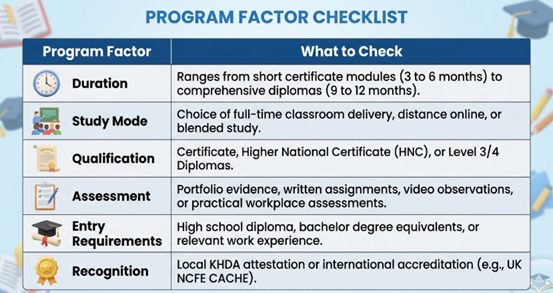
Verify whether the program is approved by relevant local educational authorities, such as the Knowledge and Human Development Authority (KHDA), or accredited by international awarding bodies like CACHE or Pearson BTEC.
Review the Curriculum
Ensure the syllabus addresses core competencies: child psychology, curriculum planning, inclusive learning, safeguarding, and observation assessment.
Consider Study Flexibility
Working professionals should look for institutions offering flexible learning formats:
- Evening or weekend modules
- Blended learning (combining online coursework with practicals)
- Self-paced digital instruction platforms
Compare Entry Requirements
Entry criteria vary according to qualification levels. Always confirm prerequisite education, minimum English language proficiency, and background clearance checks.
Who Should Consider an Early Childhood Course Dubai?
Early years training caters to individuals at various professional stages.
Career Starters
New graduates gain foundational qualifications needed to enter the education sector as certified practitioners or assistants.
Working Childcare Professionals
Practicing nursery staff can obtain recognized qualifications to meet institutional regulations and open pathways to lead teacher roles.
Career Changers
Professionals from other sectors leverage diploma options to build practical teaching expertise quickly.
Career Opportunities After an Early Childhood Course in Dubai
Completing a qualification opens varied pathways in early learning environments:
- Nursery Educator / Early Years Teacher: Leading activities and managing classrooms in registered early learning centers.
- Preschool Teaching Assistant: Assisting lead teachers with small group activities and classroom administration.
- Learning Support Assistant (LSA): Providing dedicated support for children with Special Educational Needs (SEN).
- Daycare Coordinator: Overseeing operational routines and health and safety standards in childcare facilities.
How Long Does an Early Childhood Program Take?
Program duration depends on the study mode, course depth, and qualification level.
Early Childhood Course Dubai Fees and Other Costs
Tuition fees vary significantly across institutes and universities. While short certificates may start at lower price points, full UK-accredited level 3 or level 4 diplomas generally range between AED 10,000 and AED 18,000.
Always request an all-inclusive fee schedule from the training provider to check for additional costs such as:
- Registration and administrative fees
- Assessment or examination submission fees
- Learning materials and software access
- Certificate attestation charges
How to Apply for an Early Childhood Course in Dubai
Enrolling in an early years program follows a simple, structured process.
Step 1: Select Your Course
Compare delivery modes, accreditation types, and course content to match your career goals.
Step 2: Check Eligibility
Review academic prerequisites, English proficiency standards, and experience requirements.
Step 3: Prepare Your Documents
Gather required documentation, such as:
- Passport and Emirates ID copies
- Prior academic transcripts and certificates
- Updated CV or resume
- Passport-sized photographs
Step 4: Complete the Application
Submit your online application through the institute’s portal and pay any applicable registration fees.
Step 5: Confirm Your Enrollment
Review your acceptance letter, confirm your study schedule, and arrange fee payments according to your chosen plan.
Tips for Succeeding in Your Early Childhood Studies
Maximizing your educational experience requires consistent engagement:
- Participate in Practicums: Treat practical placements as opportunities to observe experienced educators and build hands-on skills.
- Focus on Reflective Practice: Document classroom experiences to evaluate what strategies work best for different age groups.
- Build a Teaching Portfolio: Save lesson plans, observational charts, and classroom setup designs to showcase to future employers.
- Network with Peers: Engage with instructors and fellow students to learn about emerging career openings in the UAE.
Final Checklist Before Enrolling
Before making a final financial commitment to an early childhood course Dubai provider, review this checklist:
- Verify local approval (e.g., KHDA permit/attestation).
- Confirm international accreditation status.
- Ensure mandatory practical placement hours are included.
- Review all tuition schedules and refund policies.
- Check class locations and schedule flexibility.
Conclusion
Enrolling in the right early childhood course in Dubai serves as a strong foundation for building a rewarding career in early years education. Whether you are launching a new teaching path or seeking professional development, evaluating accreditation, course structure, and study flexibility will help you make an informed choice.
For individuals exploring flexible alternative training, evaluating a teaching diploma Dubai option can deliver targeted skills that align with institutional requirements across nurseries and schools in the UAE.
FAQs
1. What is an early childhood course in Dubai?
An early childhood course is a training program covering early education, child growth theories, health and safety, and classroom leadership. These programs prepare educators to support young children during their foundational developmental years in registered nurseries and schools.
2. Who can study an early childhood course in Dubai?
Eligibility depends on the specific course level. Introductory certificates are often open to high school graduates, while diploma and university-level courses may require prior educational qualifications, work experience, or English language proficiency.
3. Is a teaching diploma Dubai qualification useful for childcare professionals?
Yes, earning a recognized teaching diploma provides structured knowledge in pedagogy, curriculum planning, and child safety. It helps working practitioners enhance their teaching credentials, meet school licensing requirements, and advance into senior roles.
4. How long does an early childhood course in Dubai take?
Course duration varies by qualification level and delivery format. Short training certificates can take 3 to 6 months, whereas full level 3 diplomas or university certificates generally take 9 to 12 months to complete.
5. What career options are available after an early childhood course?
Graduates can explore various opportunities across nurseries, early learning centers, and international schools. Common job roles include early years teacher, preschool teaching assistant, learning support assistant, or childcare facility coordinator.




