
Choosing the right management qualification in the UAE can help professionals build the skills needed to manage teams, budgets, operations, and educational environments effectively. Understanding the diploma in management modules can help prospective learners see exactly what they will study and how each subject supports their career goals.
This GL Campus guide explains that modules are distinct, structured subject areas that make up a complete diploma course. Each module focuses on a core business or operational function, allowing learners to build practical competence step by step.
7 Essential diploma in management modules to Know
For professionals working in childcare, nursery, and early education settings, these modules can provide valuable knowledge for managing people, resources, compliance, and daily operations.

While specific course titles differ across providers, most comprehensive management qualifications center around seven fundamental operational pillars.
1. Leadership and Management
Leadership modules focus on the interpersonal and decision-making skills required to guide teams toward organizational goals. Candidates explore established management theories and learn how to adapt their personal management style to different workplace situations.
Key topics covered include:
- Leadership styles and adaptational management
- Team development and group dynamics
- Data-driven and ethical decision making
- Effective task delegation and accountability
- Workplace motivation techniques and morale building
In childcare and nursery environments, strong leadership is critical. Managers must coordinate educators, administrative staff, and support workers to ensure high-quality care while maintaining a positive workplace environment.
2. Human Resource Management
Human Resource Management (HRM) modules provide the foundation for recruiting, developing, and retaining qualified personnel. Managers learn how to handle employment relationships, track staff performance, and establish fair workplace policies.
Core curriculum areas include:
- Recruitment strategies and candidate selection
- Performance appraisal systems and feedback loops
- Continuous staff training and professional development
- Internal employee communication channels
- Labor law compliance and workplace policy creation
For leaders exploring a specialized childcare management diploma, HR knowledge is essential for managing adult-to-child ratios, executing mandatory background checks, and reducing staff turnover in early education centers.
3. Financial Management
Financial management modules introduce non-financial managers to key accounting principles, budgeting processes, and resource distribution models. Learners gain the tools needed to interpret financial reports and keep operations financially sustainable.
Fundamental concepts include:
- Budget planning and income forecasting
- Financial monitoring and variance analysis
- Cost control measures and waste reduction
- Capital and resource allocation
- Basic balance sheet and cash flow reporting
Financial acumen is particularly important for childcare center directors who must manage staff payroll, facility maintenance costs, supply purchases, and tuition collection while maintaining healthy operating margins.
4. Operations and Quality Management
Operations management centers on the day-to-day execution of organizational tasks. This module teaches professionals how to structure workflows, maintain high quality standards, and optimize daily operations for safety and efficiency.
Primary focus areas include:
- Short- and long-term operational planning
- Quality assurance frameworks and auditing
- Physical and educational resource management
- Process improvement methodologies
- Key performance indicator (KPI) monitoring
In early education facilities, smooth operations ensure that schedules, meal services, facility hygiene, and learning activities proceed without safety hazards or unnecessary delays.
5. Strategic Management
Strategic management moves beyond daily troubleshooting to focus on long-term organizational planning and competitive positioning. This module equips leaders to analyze market trends, evaluate operational risks, and position their organization for sustained growth.
Strategic modules help professionals:
- Set clear, measurable long-term organizational goals
- Identify expansion and improvement opportunities
- Assess market challenges and competitive risks
- Develop detailed, actionable execution plans
- Monitor institutional progress over multi-year cycles
Applying strategic principles allows early childhood business owners and administrators to adapt to changing demographics, regulatory updates, and community needs over time.
6. Communication and Professional Development
Effective communication is vital for maintaining transparency, resolving conflicts, and building trusted professional relationships. This module develops written, verbal, and interpersonal communication skills tailored for complex business environments.
Learners practice communicating effectively with:
- Internal employees and direct reports
- Parents, guardians, and families
- Senior executive leadership and board members
- Business partners and vendor representatives
- External regulatory authorities and inspectors
Strong communication skills help managers navigate sensitive discussions with parents, resolve internal staff misunderstandings, and represent their institution professionally within the wider community.
7. Safeguarding, Compliance and Risk Management
Risk management and compliance modules teach managers how to identify operational vulnerabilities, align with statutory regulations, and maintain legal compliance.
Essential topics include:
- Workplace safety standards and hazard assessments
- Child protection guidelines and safeguarding protocols
- Emergency preparedness and risk mitigation
- Regulatory compliance procedures and audit readiness
- Policy creation and record-keeping standards
For UAE-based education and childcare leaders, compliance training is critical. Facilities must adhere strictly to municipal, health, safety, and educational authority standards depending on their specific emirate and institutional structure.
How These diploma in management modules Apply to Childcare Centers
Management theory yields practical, measurable benefits when applied directly to early childhood and nursery settings.
Managing Staff Effectively
Combining leadership theories with HR fundamentals gives childcare directors the tools to hire qualified educators, coordinate shift schedules, resolve interdepartmental conflicts, and build a collaborative team culture focused on child development.
Managing Budgets and Resources
Financial training allows nursery managers to construct realistic annual budgets, manage facility maintenance expenses, purchase age-appropriate learning materials, and maintain full control over tuition revenue streams.
Maintaining Quality Standards
Operational management methodologies ensure that early years centers comply with quality frameworks. Regular quality audits help staff maintain high hygiene, safety, and educational standards across all classrooms.
Supporting Parents and Stakeholders
Advanced communication training prepares managers to build transparent, reassuring relationships with parents. Clear communication regarding child progress, administrative policies, and health measures builds long-term institutional trust.
How to Choose the Right Management Diploma in the UAE
Selecting the right program requires careful research into institutional accreditation, course delivery options, and module alignments.
Check the Curriculum
Always request a detailed syllabus before enrolling. Ensure the specific diploma in management modules align with your career track—whether you need broad business management or specialized modules tailored to early years education.
Review Entry Requirements
Verify the admission criteria early. Most accredited diploma programs specify requirements regarding prior academic credentials, years of professional work experience, and English language proficiency.
Consider Delivery Format
Evaluate which learning model best accommodates your professional schedule:
- In-person classroom learning: Offers structured face-to-face networking and immediate instructor interaction.
- Online learning: Provides maximum flexibility for working professionals balancing full-time employment.
- Blended learning: Combines online coursework with occasional weekend workshops or practical seminars.
Check Accreditation and Recognition
Verify that the program’s awarding body is recognized nationally and internationally. Checking the qualification level and regulatory approval ensures your diploma holds real value with potential employers in the UAE and abroad.
Diploma in management modules vs Childcare Management Studies
It is useful to understand the differences between broad management qualifications and targeted early childhood management tracks:
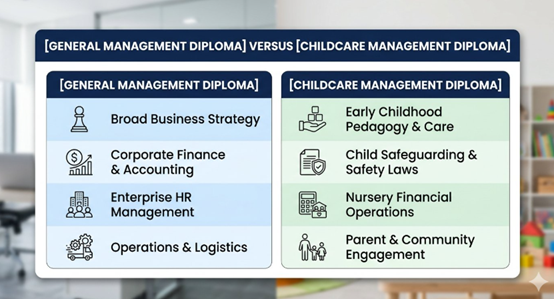
General management qualifications cover wide-ranging commercial concepts applicable across corporate, retail, and service sectors. Conversely, specialized early years management qualifications place core emphasis on child safeguarding, early learning regulations, facility health standards, and parent communication. Reviewing individual syllabus modules will show which track fits your career goals.
Career Opportunities After Studying Management
Earning a recognized management credential opens doors to various supervisory and administrative roles across multiple sectors. Potential career paths include:
- Nursery Manager or Childcare Center Director
- Early Years Academic Coordinator
- Education Administrator or Operations Supervisor
- Administrative Services Manager
- Human Resources or Facilities Officer
- Educational Entrepreneur or Center Owner
Career advancement and compensation depend on your total years of practical experience, academic qualifications, employer requirements, and local regulatory licensing standards.
How to Prepare Before Starting Your Management Diploma
Taking proactive steps before classes begin helps ensure a smooth learning experience:
Identify Your Career Goal
Define your primary objective before selecting a course. Determine whether you are aiming for a promotion in your current field, transitioning to early childhood leadership, launching a new business, or moving into broader corporate management.
Review the Curriculum Early
Obtain reading lists, module outlines, and course schedules in advance. Familiarizing yourself with key management terms and frameworks early will help you digest complex concepts once coursework begins.
Connect Learning With Your Workplace
If you are currently employed, look for opportunities to apply course concepts directly to your daily routine. Practice tracking operational processes, reviewing departmental budgets, or drafting staff communication templates in real time.
Final Thoughts
Understanding the curriculum structure is a vital first step when choosing a management program. Core subjects such as leadership, financial planning, HR management, daily operations, strategic planning, communication, and risk control form the backbone of sound business administration.
For professionals working in or aiming to lead early education centers, evaluating general business subjects alongside specialized childcare management pathways will ensure you choose a qualification that supports your long-term career success.
FAQs About diploma in management modules
What are the main diploma in management modules?
Standard management modules typically include Leadership and Management, Human Resource Management, Financial Management, Operations and Quality Management, Strategic Management, Communication, and Risk and Compliance. The exact list of subjects varies depending on the educational institution, qualification level, and specific industry focus.
Are management modules useful for childcare professionals?
Yes, core management subjects provide essential administrative skills for childcare professionals. Modules in staff management, budgeting, operational scheduling, safeguarding compliance, and parent communication directly support the daily responsibilities of running a nursery or early childhood education center.
What is a childcare management diploma?
A childcare management diploma is a specialized professional qualification designed to build leadership and operational skills specifically for early childhood environments. It blends general management principles with early years pedagogy, child safeguarding regulations, facility safety standards, and specialized nursery operations.
How do I choose the right management diploma in the UAE?
Start by evaluating the course module list, entry prerequisites, delivery mode, and tuition fees. Crucially, verify the awarding body’s accreditation, qualification framework level, and regional recognition to ensure the credential meets local ministry and employer requirements.
Can management modules help with career progression?
Studying management subjects builds practical skills in leadership, budgeting, compliance, and team oversight. Demonstrating these administrative capabilities alongside your professional experience helps qualify you for higher-level supervisory, managerial, and executive positions.




