
Germany is a popular destination for international students seeking quality education without the high tuition fees at top universities. However, understanding the study in Germany costs involves more than checking university tuition. Students must also plan for living expenses, semester contributions, visa requirements, and financial proof.
This GL Campus guide explains the main expenses involved in pursuing a Bachelor of Science (BSc) degree in Germany and shows students how to prepare a realistic budget before applying.
1. Understanding the Main Study in Germany Costs
Germany offers affordable public university education, but studying there is not entirely free. International students need to account for several expenses before and after arrival.

Tuition Fees at Public Universities
Many public universities in Germany do not charge general tuition fees for most consecutive bachelor’s programs. However, exceptions apply:
- International Student Policies: While most states keep education free or low-cost, policies vary by federal state.
- State-Specific Exceptions: In states like Baden-Württemberg, non-EU students pay a tuition fee of around €1,500 per semester.
- Specialized Programs & Universities: Certain second degrees, professional certificate courses, or specific federal state rules carry additional tuition fees.
- Private Universities: Private institutions generally charge much higher fees, ranging anywhere from several thousand to over €20,000 per year.
Semester Contribution and Administrative Charges
Even where tuition is free, students usually pay a semester contribution covering student services (Studierendenwerk), student union activities, and often a semester ticket for public transport.
The amount varies by university and location (typically ranging from €150 to €400 per semester). Students should check the official university website for the latest fee schedule.
Key takeaway: Low tuition does not mean zero educational expenses. Semester contributions and other charges should be included in every student’s budget.
2. Monthly Living Expenses for International Students
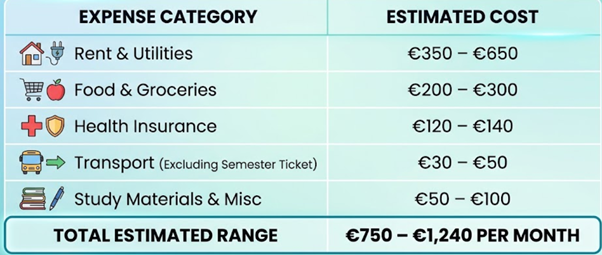
Living expenses are often the largest part of the study in Germany costs budget. The final amount depends heavily on the city, accommodation type, and personal lifestyle.
Accommodation and Housing Costs
Housing is typically the highest monthly fixed cost. The most common housing options include:
- Student Residence Halls: Run by local student organizations, these are comparatively affordable but have long waiting lists.
- Shared Apartments (WG – Wohngemeinschaft): A popular option where students divide rent and utility expenses.
- Private Apartments: Independent living that requires a higher monthly budget and usually a higher security deposit.
Accommodation costs differ considerably between cities. Major urban hubs like Munich, Frankfurt, and Berlin require a significantly higher budget than smaller university towns like Leipzig, Dortmund, or Jena.
Food, Transport, and Personal Expenses
Beyond rent, students must budget for groceries, mobile phone plans, health insurance (mandatory for students), study materials, clothing, and leisure activities. Public transport costs are frequently bundled into university semester ticket arrangements.
3. Blocked Account Minimums and Student Visa Requirements
A blocked account (Sperrkonto) is a financial arrangement commonly used by international students to demonstrate that they can support themselves during their stay in Germany.
What Is a Blocked Account?
Students deposit the required amount before traveling, and access to the money is restricted according to strict monthly release conditions. The funds are intended to cover living expenses rather than university tuition alone.
How Much Money Must You Deposit?
The required amount depends on current German visa regulations. For planning purposes, Germany’s official student visa benchmark requires €11,904 per year, which translates to a monthly withdrawal limit of €992.
Students should always verify these blocked account minimums against the latest guidelines from the German Federal Foreign Office or their local German mission before making transfers.
Is a Blocked Account the Only Option?
Alternative proofs of financial capability may be accepted in specific cases, such as a formal declaration of commitment (Verpflichtungserklärung) by a resident in Germany or an approved scholarship from a recognized foundation.
Key takeaway: Financial proof is a separate consideration from tuition fees. Students must plan for both their educational expenses and the capital required to satisfy visa regulations.
4. Total First Year Budget for a Bachelor of Science in Germany
Planning the first year of a Bachelor of Science Germany program requires a complete overview of expected upfront and recurring expenses.
One-Time Expenses Before Arrival
- University application or document processing fees (e.g., via uni-assist).
- Visa application processing charges.
- One-way or return flight tickets and initial transit.
- Accommodation security deposit (often 2–3 months’ rent) and temporary lodging.
- Initial household items, winter clothing, and primary study materials.
Recurring Annual Expenses
Students should estimate their ongoing living costs, mandatory health insurance, semester contributions, and any applicable tuition fees across the academic year. Note that the blocked account deposit functions as your living fund pool rather than an extra fee paid to the state.
5. Public vs. Private Universities: Which Is More Affordable?
Choosing the right institution type significantly impacts your overall academic expenditure.
Benefits of Public Universities
- Low/No Tuition: Most public institutions offer low tuition higher education, charging zero tuition for consecutive bachelor’s degrees.
- Academic Reputation: Extensive research facilities, structured science curricula, and strong academic backing.
- Infrastructure: Access to subsidized student cafeterias (Mensa), libraries, and public transit passes.
When a Private University May Be Worth Considering
Private universities offer alternative teaching formats, flexible schedules, specialized English-taught BSc tracks, and smaller class sizes. However, their tuition rates will demand a much larger financial investment.
6. How to Reduce Study in Germany Costs Without Sacrificing Education
- Choose Your City Strategically: Target mid-sized or smaller university towns where rent and lifestyle costs are lower.
- Apply Early for Student Housing: Secure a room in a public student residence hall early, as private rentals command higher rates.
- Leverage Student Discounts: Take advantage of reduced rates for public transit, cultural events, software, and dining.
- Explore Part-Time Work: International students are legally allowed to work a limited number of days per year, though employment should supplement—not instantly replace—your primary visa funding source.
Common Budgeting Mistakes International Students Should Avoid
- Assuming every public university is completely free across all federal states.
- Ignoring compulsory health insurance and semester contributions.
- Relying on outdated financial figures when calculating blocked account minimums.
- Underestimating security deposits and setup costs for apartments.
- Depending entirely on finding an immediate part-time job upon arrival.
Is Germany Worth the Investment for BSc Students?
Germany offers an exceptional balance of rigorous scientific training, global career prospects, and accessible public education. By calculating the complete financial picture ahead of time, prospective international students can step into their academic journey with clarity and confidence.
Frequently Asked Questions
What are the main study in Germany costs for international students?
The main expenses include living costs, accommodation, groceries, health insurance, semester contributions, and any applicable tuition fees, alongside upfront visa and travel charges.
Is a Bachelor of Science in Germany free for international students?
Many public universities charge no general tuition fees for bachelor’s programs, though specific states (like Baden-Württemberg) and specialized degrees may enforce standard fees.
How much money is required in a German blocked account?
The official regulation requires a yearly deposit of €11,904, allowing a maximum monthly release of €992.
Can international students reduce their living expenses in Germany?
Yes, by opting for shared apartments or student halls, cooking at home, using student discounts, and selecting budget-friendly university cities.
What is the cheapest way to study science in Germany?
Enrolling in a tuition-free public university located in a lower-cost regional city while utilizing public student housing and local transit subsidies.