
Applying for a Doctor of Business Administration (DBA) can feel overwhelming when you are unsure about eligibility, professional experience expectations, research proposals, or overall tuition costs. Unlike traditional graduate degrees, a DBA demands a synthesis of high-level academic competence and practical executive experience. Because admission standards, program formats, and fee structures differ significantly across universities, verifying specific institutional guidelines early is critical.
This GL Campus guide breaks down essential requirements, fee components, application strategies, and selection criteria to help you navigate your doctoral journey with confidence.
7 Essential DBA Admission Requirements and Fee Factors
1. Academic Qualifications
Most business schools require a master’s degree, such as an MBA, MSc in Management, or a related quantitative field—from an accredited institution. However, select universities evaluate exceptional applicants holding a bachelor’s degree if supported by extensive executive leadership experience, professional certifications, or prior published work.

2. Professional Experience
Because the DBA relies on peer learning and applied research, professional experience is a cornerstone of executive DBA eligibility. Institutions typically look for:
- A minimum of 3 to 5 years of senior management, executive, or entrepreneurial experience.
- Demonstrated leadership responsibilities, budgetary oversight, or strategic decision-making authority.
- A career track record that demonstrates readiness to analyze corporate systems.
3. Research Proposal
The research proposal is often the most critical component of your application. It outlines your intended area of study and demonstrates your ability to frame a business problem analytically.
Key Elements of a Strong Proposal:
- Problem Statement: A practical business issue backed by current industry data.
- Research Objectives: Clear, focused questions your study aims to answer.
- Methodology: Proposed qualitative, quantitative, or mixed-methods framework.
- Expected Impact: How the findings will improve business operations or industry frameworks.
4. English Language Requirements
For programs delivered in English, non-native speakers must demonstrate proficiency unless they earned a previous degree at an institution where English was the primary language of instruction. Commonly accepted standardized tests include:
- IELTS Academic: Typically a minimum overall score of 6.5 to 7.0.
- TOEFL iBT: Generally a minimum score of 88 to 100.
- Duolingo English Test: Accepted by select institutions, usually requiring scores of 120+.
5. Supporting Documents
A complete application file must include polished administrative and professional records:
- Official academic transcripts from all post-secondary institutions attended.
- An executive CV highlighting professional progression, projects, and leadership roles.
- Two or three professional/academic letters of recommendation.
- A personal statement explaining your motivation for pursuing a doctorate.
6. Interview and Entrance Requirements
Shortlisted candidates are usually invited to an interview with the admissions panel or potential research supervisors. These discussions assess your research interests, communication skills, and ability to balance rigorous study with professional commitments. Institutions evaluating entrance metrics for doctorates look for candidates who demonstrate strong analytical capacity and a clear commitment to completing their dissertation.
7. Tuition and Other DBA Fees
Financially, candidates must account for all costs associated with their studies. Beyond base tuition, programs may include specific fees that impact the total cost:
What Is the Typical Business Doctorate Cost?
The overall business doctorate cost varies widely depending on institutional prestige, location, study format, and program duration. Total tuition ranges from $20,000 in hybrid or state-supported programs to over $120,000 at top-tier global business schools.
Factors That Influence DBA Tuition Fees
- Institutional Reputation & Accreditation: AACSB, AMBA, or EQUIS-accredited schools often command higher tuition due to faculty research standing and global brand recognition.
- Delivery Format: Fully online or hybrid models generally reduce facility costs compared to full-time, on-campus programs.
- Supervision Depth: Programs providing one-on-one dissertation mentoring from senior faculty require significant institutional resources.
Tuition Fees vs. Total Program Cost
Advertised tuition rarely reflects the complete financial commitment. Candidates must calculate “true total cost” by factoring in research software licenses, data collection costs, academic conference fees, and travel expenses for mandatory residency weekends.
Executive DBA Eligibility for Working Professionals
Executive DBA programs are structured specifically for working professionals, utilizing weekend modules, evening virtual sessions, or modular block teaching.
This applied background enriches cohort discussions, allowing students to bring active corporate challenges directly into the academic classroom.
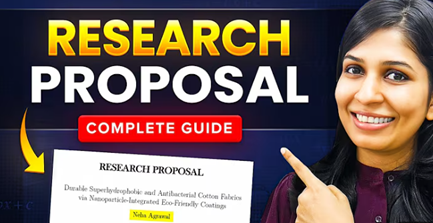
How to Prepare a Strong DBA Research Proposal
To craft an effective proposal, focus on clarity and practical relevance:
- Identify a Specific Business Problem: Avoid overly broad topics like “How to improve leadership.” Instead, target precise areas, such as “Evaluating Agile project management adoption within traditional banking frameworks.”
- Formulate Clear Questions: Draft 2–3 core research questions that your study can realistically address.
- Demonstrate Practical Value: Clearly articulate how your findings will help managers solve operational or strategic challenges.
- Outline a Realistic Methodology: Indicate whether your research will rely on qualitative interviews, quantitative surveys, or a mixed-methods design.
What Documents Do You Need for a DBA Application?
Use this checklist to gather required materials before your application deadlines:
- Official Transcripts: Verified copies from all previous universities.
- Degree Certificates: Proof of earned bachelor’s and master’s credentials.
- Executive Resume/CV: Detailed history of career milestones and management roles.
- Research Proposal: Formatted to the target university’s length and style requirements.
- Letters of Recommendation: 2–3 professional references speaking to your strategic thinking and academic persistence.
- Personal Statement: A concise narrative connecting your professional journey to your doctoral goals.
- Proof of Language Proficiency: Official test results if required.
How Much Are Enrollment Fees for DBA Programs?
Understanding fee structures prevents surprise expenses during registration:
Application & Registration Fees
Application submission fees generally range from $50 to $200. Upon acceptance, universities often charge enrollment fees for DBA candidates (ranging from $500 to $2,000) to reserve a seat in the cohort. This fee is typically applied toward your first semester’s tuition.
Tuition Payment Structures
Institutions typically offer flexible payment arrangements to help manage costs:
- Pay-Per-Module: Tuition is billed as you register for each course.
- Semester Installments: Fees are divided into equal payments across each academic term.
- Annual Tuition Schedule: Billed at the beginning of each academic year.
Additional DBA Package Costs
Always check whether published DBA package costs cover core textbooks, software access, dissertation defense fees, and campus residency accommodations, or if these are billed separately.
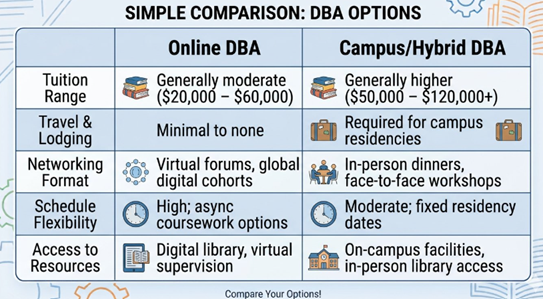
Online DBA vs. Campus DBA Costs
Choosing between online and on-campus formats involves evaluating financial, professional, and practical trade-offs:
How to Avoid DBA Application Rejection
- Avoid Vague Research Topics: Formulate a clear, focused research question that demonstrates critical thinking.
- Highlight Management Depth: Clearly articulate your strategic responsibilities, team leadership, and decision-making authority in your CV.
- Tailor Your Application: Ensure your research proposal aligns with the expertise of the university’s research faculty.
- Submit Complete Files: Missing transcripts or reference letters can delay your application review and jeopardize cohort placement.
DBA Admission Requirements and Fees Comparison Checklist
Before submitting your application, review this final checklist:
- Academic Eligibility: Confirmed my master’s degree meets accreditation criteria.
- Experience Threshold: Verified my work history satisfies management requirements.
- Proposal Polish: Proofread my research proposal for analytical depth and clarity.
- References Secured: Confirmed my referees submitted their recommendation letters.
- Budget Calculated: Accounted for total tuition, enrollment fees, and research expenses.
- Application Submitted: Completed the online portal submission ahead of the deadline.
How to Choose the Right DBA Program
Selecting the right program requires balancing academic rigor, professional fit, and budget constraints:
- Verify Institutional Accreditation: Ensure the business school holds recognized institutional accreditation (such as AACSB, AMBA, or EQUIS).
- Review Faculty Research: Check whether active professors are publishing in your target area of study.
- Evaluate Cohort Dynamics: Look for programs that attract experienced peers who can expand your executive network.
- Compare True Total Costs: Evaluate complete financial commitments rather than relying solely on advertised per-credit rates.
Are DBA Admission Requirements and Fees Worth the Investment?
A Doctor of Business Administration requires a significant commitment of time, effort, and financial resources. For senior professionals aiming to establish thought leadership, transition into executive consulting, or solve complex organizational problems, it offers a distinct competitive advantage. Success depends on selecting a program that aligns with your research interests, career vision, and personal budget.
Final Thoughts
Navigating DBA Admission Requirements and Fees effectively comes down to thorough preparation and clear goal-setting. By understanding academic prerequisites, refining your research proposal, and planning for all program costs early, you set yourself up for a smooth application process. Start researching target institutions well in advance to give yourself ample time to build a strong, successful application.
Frequently Asked Questions
What are the main DBA admission requirements?
Most DBA programs require an accredited master’s degree, 3 to 5 years of management or executive experience, official transcripts, letters of recommendation, proof of language proficiency, and a detailed research proposal outlining a practical business problem.
How much does a DBA usually cost?
Total costs vary depending on the university, study format, and location. Tuition generally ranges from $20,000 for online programs to over $120,000 at top-tier global institutions. Applicants should also budget for registration, books, research software, and residency travel.
Do I need work experience to apply for a DBA?
Yes. Because a DBA emphasizes applied business research, almost all programs require a strong professional track record in management, leadership, or entrepreneurship to ensure candidates can engage meaningfully with real-world corporate challenges.
Do DBA programs require a research proposal during admission?
Yes, most institutions require a research proposal. This document demonstrates your ability to identify a relevant business problem, formulate research questions, and outline an appropriate methodology for your dissertation.
Are online DBA programs cheaper than campus programs?
Online programs often have lower tuition rates and eliminate travel and relocation expenses. However, tuition varies by institution, so you should compare the total cost—including supervision, technological access, and administrative fees—across both formats.




