

Starting an online degree in Dubai is an exciting educational milestone, but navigating admission portals, eligibility criteria, document verification, and tuition structures can feel overwhelming. Whether you are a working professional seeking career growth or an international student looking for flexible higher education to study in the UAE, this guide breaks down pre-application checks, document preparation, digital submission steps, and post-admission enrollment requirements.
By following this GL Campus guide’s practical steps, you can submit your application with confidence and avoid unnecessary delays.
How to Apply to Online Universities in Dubai Step by Step
Follow this structured 7-step guide to navigate your admission process smoothly from research to course registration.

Step 1: Choose the Right Online Degree
Select a degree that aligns directly with your long-term career trajectory rather than choosing based solely on institutional brand recognition. Compare course modules, faculty expertise, industry partnerships, and practical capstone projects across multiple institutions.
Step 2: Check Admission Requirements
Examine official entrance criteria on the university’s portal. Ensure your prior academic background meets minimum grade point averages (GPA) or percentage thresholds. Verify English language proficiency standards, such as minimum IELTS, TOEFL, or EmSAT scores.
Step 3: Prepare Your Documents
Gather, scan, and organize your official academic and personal records. Having clear, high-resolution PDF copies ready speeds up processing once the portal opens.
Step 4: Complete the Online Application
Create a student portal account to launch your Dubai digital university application. Fill out all personal, contact, and academic sections accurately. Ensure your full name matches your passport exactly to prevent identity verification issues later.
Step 5: Submit Admission Forms Dubai
Review every section of your application for typographical errors before clicking final submission. Pay any required non-refundable application processing fees to ensure your file moves directly to the admissions committee.
Step 6: Complete Credit Evaluation
If you have completed prior college or university coursework, request a credit evaluation during application submission. Submit official transcripts, module syllabi, and credit values to determine whether advanced standing or course exemptions apply to your degree path.
Step 7: Receive the Admission Decision and Enroll
Once reviewed, the university will issue an official decision: an unconditional offer, a conditional offer (requiring pending documents or test scores), or an interview invitation. Upon acceptance, sign your offer letter, pay the initial tuition deposit, and complete your enrollment profile before classes begin.
Documents Needed for Remote College Enrollment
Having your records properly formatted and certified is essential for a smooth remote college enrollment experience.
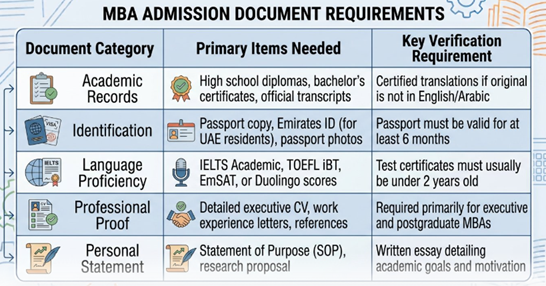
Before You Apply, Check These 5 Things
Proper preparation before submitting your portal application prevents unexpected rejections, processing delays, and avoidable financial losses.
1. University Recognition
Verify that the university is officially recognized by relevant educational authorities, such as the Knowledge and Human Development Authority (KHDA) in Dubai, the UAE Ministry of Education, or recognized international accrediting bodies.
2. Program Accreditation
Institutional recognition does not automatically apply to every degree. Confirm that your specific field of study holds programmatic accreditation from professional bodies (such as AACSB for business or ABET for engineering).
3. Entry Requirements
Review the exact admission criteria for your intended qualification level. Requirements vary significantly between undergraduate, postgraduate, and executive diploma programs.
4. Tuition and Additional Costs
Calculate the true total cost of your degree. Ask about registration fees, technology charges, digital library access fees, graduation costs, and flexible installment plans before enrolling.
5. Learning Format
Clarify whether the program is 100% asynchronous online or requires synchronous live lectures, proctored virtual exams, or occasional in-person campus workshops.
What Universities Usually Review
- Academic Level: Previous coursework must match or exceed the academic level of the target course.
- Subject Alignment: Course learning outcomes and module syllabi must closely align with the new curriculum.
- Grades Earned: Most institutions require a minimum grade of “C” or equivalent in each transfer module.
- Recency of Study: Technical or rapidly changing subjects (such as computer science or finance) may require courses to have been completed within the past 5 to 7 years.
Can Previous Credits Reduce Study Time?
Yes. Recognized prior learning can waive introductory modules, allowing you to enter directly into advanced study stages. However, credit transfer limits vary by institution, with most universities requiring students to complete at least 50% of their total degree credits directly with the awarding institution.
Common Mistakes to Avoid When Applying
- Applying Without Verifying Recognition: Enrolling in unaccredited online programs can result in degrees that are not recognized by employers or government ministries.
- Submitting Incomplete Documents: Uploading low-resolution scans, missing transcript pages, or expired language test certificates causes processing delays.
- Ignoring Credit Evaluation Rules: Assuming all previous college courses will automatically transfer without submitting official module descriptions for audit.
- Missing Application Intake Deadlines: Waiting until the final week before semester launch can lead to missed scholarship opportunities or delayed enrollment to the next intake.
How to Make Your Online University Application Stronger
- Tailor Your Personal Statement: Clearly explain why you chose an online study format, how the curriculum supports your career ambition, and how you manage self-directed study schedules.
- Highlight Relevant Work Experience: Include a clean, professional CV that showcases leadership history, certifications, and technical skills that complement your chosen field of study.
- Ensure Precise Information Matching: Double-check that dates, school names, and personal identifiers match perfectly across all uploaded documents, transcripts, and application forms.
Is Learning How to Apply to Online Universities in Dubai Difficult?
No, understanding how to apply to Online Universities in Dubai is straightforward when you approach it step by step. Online portals are designed to guide applicants through document uploads, fee payments, and profile creation seamlessly. The key to a stress-free experience lies in starting early, verifying program credentials, organizing your academic transcripts, and responding promptly to requests from the admissions team.
Final Online University Application Checklist
Use this quick checklist before submitting your application package:
- Selected an accredited online university and verified program recognition.
- Confirmed academic entry requirements and English language proficiency thresholds.
- Obtained high-resolution PDF scans of transcripts, diplomas, and passport pages.
- Drafted a tailored personal statement and updated professional CV.
- Prepared module syllabi for previous course credit evaluation requests.
- Completed all personal and academic sections on the digital application portal.
- Paid the required application processing fee.
- Noted key admission response dates and orientation schedules.
Conclusion
Mastering How to Apply to Online Universities in Dubai is about thorough preparation, clear documentation, and timely execution. Following a structured application strategy allows you to avoid common enrollment pitfalls, protect your educational investment, and secure your place in a high-quality digital degree program. Take the first step today by gathering your documents and exploring recognized online programs that align with your professional goals.
Frequently Asked Questions
How do I apply to an online university in Dubai?
Select an accredited program, check its entrance requirements, gather required academic and personal documents, create an account on the university’s online admission portal, upload your materials, and submit your application along with any required processing fee.
What documents are required for online university admission?
Common required documents include official academic certificates, high school or university transcripts, a valid passport copy, proof of English language proficiency (IELTS, TOEFL, or EmSAT), a professional CV, and a personal statement.
Can I transfer previous university credits to an online degree?
Yes, many universities evaluate prior completed coursework for credit transfer. Acceptance depends on subject alignment, academic level, grades earned, and the institution’s specific transfer credit policy.
How long does an online university application take?
Application processing times typically range from 1 to 4 weeks depending on the university, document verification processes, credit evaluation requests, and overall application volume.
Can international students apply to online universities in Dubai?
Yes, international students can apply to online programs in Dubai from anywhere in the world. Verify that the degree is offered fully online and does not require physical residency or on-campus attendance.




