

The cost of pursuing a business degree abroad can feel overwhelming when tuition fees, accommodation, living expenses, travel, and study materials accumulate. Financial limitations should never prevent ambitious students from pursuing a world-class international business education. Scholarships for Business Students in Europe offer a vital pathway to help reduce financial burdens, allowing candidates to focus on academic excellence and executive leadership development.
This GL Campus comprehensive guide outlines the main funding options, eligibility rules, document requirements, and strategies for building a competitive application for business education in Europe.
7 Types of Funding Business Students Should Explore
Navigating available funding models helps students target opportunities that best match their academic background and financial needs.

1. University-Based Business Scholarships
Most European business schools reserve institutional funding for outstanding candidates. These scholarships are awarded automatically upon admission or require a supplemental essay during the application process.
2. Government-Funded Scholarships
European governments offer competitive national scholarship initiatives to attract global academic talent. Prominent examples include the Chevening Scholarships (UK), DAAD Scholarships (Germany), Eiffel Excellence Scholarships (France), and Holland Scholarships (Netherlands).
3. MBA Scholarships
Master of Business Administration programs often feature dedicated funding tracks. Selection committees evaluate professional track records, managerial experience, GMAT/GRE scores, and executive leadership potential.
4. Management Master’s Scholarship Opportunities
Students pursuing specialized master’s degrees in management, finance, marketing, or supply chain logistics can access targeted management master’s scholarship options. These awards are often funded by corporate partners seeking specialized talent in specific industries.
5. Doctoral Business Funding
Doctoral candidates (Ph.D. or DBA) frequently receive research grants, university assistantships, or full tuition waivers in exchange for research contributions, teaching assistance, or publication output.
6. Merit-Based Scholarships
Merit awards prioritize academic excellence, exceptional test scores, research achievements, or notable extracurricular leadership, regardless of financial background.
7. Need-Based Financial Support
Need-based grants evaluate a candidate’s financial status, family income, and personal circumstances to ensure capable students are not excluded from higher education due to financial constraints.
Where to Find European Business Funding
Discovering legitimate European business funding requires utilizing official resources and verified databases:
- Official University Portals: Check the “Fees and Funding” sections on target university websites.
- Government Education Websites: Portals like Study in Europe, Campus France, and DAAD host verified funding search engines.
- Reputable International Databases: Platforms like Studyportals or European funding directories offer searchable scholarship listings. Always verify details directly with the awarding institution.
Why Look for Business Scholarships in Europe?
Europe remains a prime destination for international business education. Home to global financial hubs and top-ranked business schools, the continent provides access to international corporate networks, innovative startup ecosystems, and diverse multicultural cohorts.
The Financial Challenge of Studying Abroad
When planning an international business degree, students must account for multiple expense categories:
- Tuition Fees: Varies widely depending on the country, institution, and study level (e.g., Undergraduate, Master’s, or MBA).
- Accommodation: Rent for student housing or private apartments in major European cities.
- Living Expenses: Food, healthcare insurance, utilities, and local transportation.
- Study Materials: Textbooks, case study access, specialized software, and academic trips.
Securing study abroad grants or scholarships can partially or fully offset these costs, making higher education manageable.
How to Find Scholarships for Business Students in Europe
Finding suitable Scholarships for Business Students in Europe requires a methodical approach:
- Select Your Business Specialization: Define whether your focus is General Management, Finance, International Business, Marketing, or Entrepreneurship.
- Determine Your Study Level: Match your target stage—Bachelor’s, Master’s, MBA, or Doctorate—with appropriate funding programs.
- Verify Eligibility Criteria: Check academic prerequisites, work experience requirements, nationality restrictions, and language proficiency thresholds.
- Compare Coverage Limits: Calculate whether the award covers full tuition, partial fees, or living allowances.
- Track Application Deadlines: Scholarship deadlines often fall 3 to 6 months before standard university admission cutoffs.
How to Build a Winning Scholarship Application
Securing competitive funding requires presenting a coherent narrative that connects past achievements with future corporate goals.
- Write a Targeted Personal Statement: Articulate why you chose your specific business discipline, how the program aligns with your career path, and what value you bring to the student cohort.
- Demonstrate Strategic Leadership: Highlight entrepreneurial projects, internship achievements, corporate promotions, or community leadership roles.
- Secure Strong Recommendation Letters: Choose academic supervisors or line managers who can speak concretely to your analytical capability, work ethic, and leadership potential.
- Formulate a Clear Career Strategy: Outline realistic short-term and long-term career milestones post-graduation.
How to Fund International Degree Costs Beyond Scholarships
Candidates seeking to fund international degree studies should create a diversified financial plan:
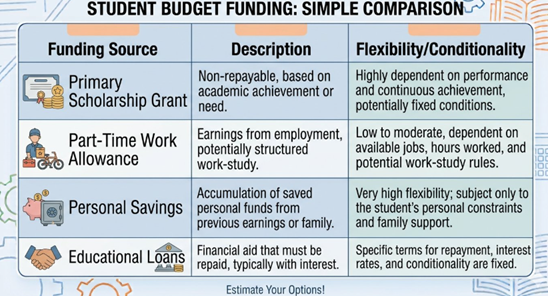
Combining multiple income sources helps maintain financial stability throughout your degree.
Combine Different Support Sources
Where institutional guidelines permit, students can combine partial tuition waivers with regional grants, university work-study programs, or corporate sponsorships.
Calculate Total Study Budget
Build a realistic monthly budget that includes rent, health insurance, local transport, food, technology access, and emergency contingency funds before accepting an admission offer.
Business School Stipends and Other Financial Support
In addition to tuition fee waivers, some master’s and doctoral tracks offer business school stipends. These monthly or quarterly living allowances help offset accommodation and daily living expenses. Review whether stipend amounts are fixed or subject to academic performance and teaching duties.
Common Scholarship Mistakes to Avoid
- Applying Without Checking Eligibility: Submitting applications without meeting fundamental criteria (such as minimum GMAT scores or nationality requirements) leads to automatic rejection.
- Reusing Generic Motivation Letters: Reusing standardized essays without tailoring content to the specific scholarship provider or university values weakens your application.
- Ignoring Submission Deadlines: Scholarship deadlines are strict; late submissions are generally not evaluated.
- Overlooking Smaller Awards: Ignoring smaller regional grants or departmental bursaries can mean missing out on funding that cumulatively covers significant study costs.
Are Scholarships for Business Students in Europe Worth Applying For?
Yes. Applying for Scholarships for Business Students in Europe requires time, effort, and careful preparation, but the financial relief and professional prestige of securing an award make the process worthwhile. Even partial funding reduces financial stress, allowing you to focus on your studies and build professional networks.
Final Scholarship Application Checklist
Use this pre-submission checklist to review your application:
- Confirmed complete eligibility against official program criteria.
- Verified details using official university or government portals.
- Tailored personal statements to highlight business leadership and career goals.
- Secured signed recommendation letters from academic or professional referees.
- Obtained certified translations for transcripts and certificates.
- Proofread all essay responses for clarity, structure, and grammar.
- Logged all application deadlines and submitted ahead of schedule.
Conclusion
Securing Scholarships for Business Students in Europe comes down to careful research, early preparation, and presenting a clear academic vision. By exploring diverse funding sources, meeting application deadlines, and crafting a tailored personal statement, you can reduce financial barriers and pursue a quality business education in Europe.
Frequently Asked Questions
Are there scholarships for international business students in Europe?
Yes, international students can access university merit scholarships, government grants, and corporate-sponsored awards. Eligibility varies based on nationality, academic background, and chosen field of study.
Can MBA students get scholarships in Europe?
Yes. Top European business schools offer dedicated MBA scholarships focused on leadership potential, diversity, entrepreneurial achievements, and academic excellence.
What documents are needed for business scholarships?
Common requirements include official academic transcripts, degree certificates, an updated CV, a personal statement, letters of recommendation, and standardized test scores (such as GMAT, GRE, IELTS, or TOEFL).
Can a scholarship cover the complete cost of studying business in Europe?
Fully funded scholarships cover tuition fees, a monthly living stipend, health insurance, and occasionally travel allowances. Partial scholarships cover a portion of tuition costs.
When should I apply for European business scholarships?
Start researching 9 to 12 months before your planned intake. Scholarship deadlines often fall between November and April for studies commencing in the autumn.




