

Planning to study in Australia can open the door to internationally recognized education, practical learning and diverse career opportunities. With 2027 approaching, students who want to study business in Australia need to understand course choices, fees, entry requirements and university options before applying.
This GL Campus guide explains what prospective students should know about studying in Australia and how to make a confident choice for their academic and professional future.
Why Study Business in Australia in 2027?
Australian Universities continues to rank among the world’s top destinations for higher education, particularly for business and commerce disciplines. The nation’s higher education sector is built around global standards, industry integration, and modern business practices.

Key advantages of pursuing business education in Australia include:
- Internationally Recognised Qualifications: Australian qualifications are accredited globally, making graduates competitive in international job markets.
- Practical and Career-Focused Education: Curricula are routinely updated alongside industry leaders to include case studies, group projects, and real-world internships.
- Diverse Business Specialisations: From supply chain management to business analytics, universities offer targeted tracks aligned with emerging industry trends.
- Multicultural Learning Environment: Classrooms host students from across the globe, providing firsthand experience in cross-cultural communication and international collaboration.
- Opportunities to Develop Professional Networks: Proximity to major Asia-Pacific business hubs creates strong links to multinational companies, start-ups, and professional bodies.
A solid grounding in business principles supports long-term career growth across diverse fields such as management, finance, marketing, entrepreneurship, and international trade.
7 Key Steps to Study Business in Australia
Navigating an international application requires careful planning and a clear timeline. Following these seven practical steps helps streamline the process before submitting an application.
1. Choose the Right Business Course
The first step is selecting a program that aligns with your professional ambitions. Australian institutions offer structured pathways ranging from foundational diplomas to postgraduate research degrees.
Common study options include:
- Bachelor of Business: Focuses on general management principles, corporate structure, and operational fundamentals.
- Bachelor of Commerce: Offers a stronger emphasis on quantitative methods, economics, finance, and accounting.
- Specialized Majors: Direct focus on fields like Marketing, Finance, Human Resource Management, Accounting, or International Business.
- Master of Business Administration (MBA): Geared toward professionals aiming to accelerate into executive or leadership roles.
When exploring different business courses in Australia, match the curriculum and specialization options to your personal strengths and long-term career goals.
2. Compare Australian Business Universities
Once you have identified your ideal course type, evaluate potential institutions. Rather than relying solely on global university rankings, look at factors that directly impact your day-to-day student experience and outcomes.
Consider these primary criteria:
- Course Curriculum: Does the syllabus offer practical units, electives, or double majors?
- University Reputation: Look at subject-specific reputation and industry links rather than overall institution rank alone.
- Tuition Fees and Cost: Costs vary significantly depending on whether the institution is a Go8 university or a modern regional institution.
- Location: Consider city living expenses, lifestyle preferences, and regional study incentives.
- Industry Connections & Internships: Check if the university facilitates corporate placements, mentorship programs, or co-op work terms.
- Student Support Services: Look into international student assistance, academic support, and dedicated career hubs.
Comparing multiple Australia business universities ensures you select an institution that offers the right balance of academic rigor, support, and financial value.
3. Understand 2027 Entry Requirements
Admission standards vary between institutions, level of study, and individual academic programs. Reviewing requirements early prevents unexpected delays.
Standard admission criteria include:
- Academic Qualifications: Completion of secondary school equivalent to Australian Year 12 for undergraduate courses, or a recognised bachelor’s degree for postgraduate entry.
- Academic Transcripts: Certified copies of previous academic records and graduation certificates.
- English Language Proficiency: Valid scores from tests like IELTS, TOEFL iBT, PTE Academic, or Cambridge English.
- Personal Statement or Statement of Purpose (SOP): Demonstrating academic intent, background, and career goals.
- Course-Specific Prerequisites: Relevant work experience, GMAT/GRE scores, or portfolio submissions (primarily for specific postgraduate or executive programs).
4. Calculate Your Business Degree Costs
Financial planning should cover both initial academic fees and ongoing living costs. Understanding the complete financial commitment ensures smooth budgeting throughout your studies.
Primary budget components include:
- Tuition Fees: Billed annually or per semester.
- Accommodation: On-campus housing, private rentals, or shared accommodation.
- Living Expenses: Groceries, utilities, dining, personal expenses, and local transportation.
- Overseas Student Health Cover (OSHC): Mandatory medical insurance for international students in Australia.
- Textbooks & Supplies: Course materials, software licenses, and academic equipment.
Calculating total estimates for your business degree in Australia helps maintain financial stability while living abroad.
Tuition Fees vs Living Expenses
It is vital to distinguish between fixed academic tuition fees and variable daily living expenses. While tuition is a set cost payable to the university, living expenses vary greatly depending on location, accommodation choices, and personal lifestyle. Establishing a comprehensive annual budget before lodging your visa application helps set realistic expectations.
5. Select the Right 2027 Intake
Australian universities typically operate on a semester or trimester system, offering multiple entry points throughout the year.
- Semester 1 (Main Intake): Runs from February/March to June.
- Semester 2 (Secondary Intake): Runs from July/August to November.
- Trimester Systems: Offered by select universities with intakes around February, June, and October.
To study in Australia in 2027, begin researching programs 9 to 12 months in advance. Early planning allows sufficient time for document verification, visa processing, and securing accommodation before classes commence.
6. Explore Scholarships and Financial Support
Financial aid options exist across Australian institutions to reward academic achievement and support international talent.
Avenues for funding include:
- University Merit Scholarships: Automated or application-based partial fee waivers awarded for strong academic performance.
- Faculty-Specific Grants: Funding opportunities provided specifically by business schools or commercial faculties.
- Government-Funded Scholarships: Competitive awards offered via government initiatives or bilateral programs.
- Bursaries & Regional Grants: Financial assistance aimed at students choosing regional campus locations.
Scholarship criteria, application deadlines, and funding values differ considerably across institutions, making early research essential.
7. Prepare for Student Life and Career Opportunities
Earning a degree involves more than attending lectures; active engagement on campus lays the foundation for future professional growth.
To maximize your university experience:
- Engage with Career Services: Utilize resume workshops, interview preparation sessions, and career fairs hosted on campus.
- Join Student Societies: Participate in business, marketing, or finance clubs to build peer networks and practice leadership skills.
- Seek Internships: Apply for placement programs or industry-sponsored projects integrated into your curriculum.
- Attend Networking Events: Connect with visiting industry professionals, alumni, and guest lecturers.
Building practical experience during your studies enhances graduate job prospects and builds personal confidence.
Popular Business Courses in Australia for International Students
Australian business schools offer diverse pathways suited to varying career interests and market demands.
Business Management
Focuses on organizational structure, operations, strategic planning, and leadership principles. Graduates often pursue roles in operations management, corporate strategy, or business consulting.
Marketing
Covers consumer behavior, brand management, digital marketing, market research, and communication strategy. This stream prepares students for creative and analytical roles in agency or corporate marketing environments.
Finance and Accounting
Emphasizes financial modeling, investment analysis, corporate reporting, auditing, and risk management. These courses align with accreditation standards from professional accounting and finance bodies.
International Business
Examines global trade dynamics, international supply chain systems, cross-cultural management, and foreign market entry strategies. It suits students aspiring to work in global trade, multinational firms, or diplomatic trade missions.
MBA Programs
Designed for experienced professionals aiming for senior leadership, executive management, or business transformation roles. Programs emphasize strategic decision-making, executive communication, and high-level business analytics.
How Much Does It Cost to Study Business in Australia?
Expenses vary significantly based on institution prestige, degree level, and city location.
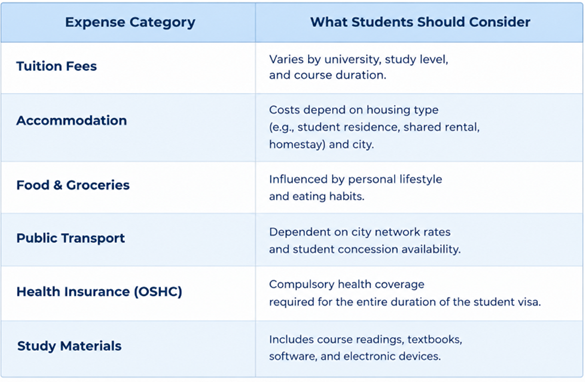
Because lifestyle choices and institutional fee structures vary, students should evaluate individual city costs and university fee schedules directly when planning their budget.
Study Business in Australia Entry Requirements
Preparing a thorough application requires meeting both academic and language proficiency standards set by the receiving institution.
Academic Requirements
- Undergraduate: Completion of Australian Senior Secondary Certificate of Education (Year 12) or an international equivalent (e.g., A-Levels, IB Diploma) with competitive grades in core subjects.
- Postgraduate: A completed bachelor’s degree from a recognized tertiary institution. Some specialized courses require a background in related disciplines.
English Language Requirements
Demonstrated proficiency in English is required for academic success and visa compliance. Standardized tests accepted across most institutions include:
- IELTS Academic
- PTE Academic
- TOEFL iBT
Required minimum scores vary depending on the course level and university.
Additional Documents
Applicants are usually required to submit:
- Certified academic transcripts and completion certificates
- Copy of a valid passport
- Proof of English language test results
- Statement of Purpose (SOP)
- Resume/CV (primarily for postgraduate or executive programs)
- Letters of recommendation (where applicable)
Career Opportunities After a Business Degree in Australia
A business qualification develops adaptable skill sets relevant across diverse industry sectors.
Common career directions include:
- Marketing & Communications: Brand Strategist, Digital Marketing Specialist, Market Research Analyst.
- Business Management: Operations Manager, Management Consultant, Business Analyst.
- Finance & Banking: Financial Analyst, Investment Advisor, Corporate Risk Specialist.
- Accounting: Auditor, Financial Accountant, Tax Consultant.
- Human Resources: Talent Acquisition Specialist, HR Business Partner, Organizational Development Officer.
- Entrepreneurship: Business Founder, Start-up Operations Lead, Innovation Consultant.
Career outcomes ultimately depend on your chosen specialization, practical experience, networking, and personal initiative throughout your studies.
How to Choose the Right Business University in Australia
Selecting the right university involves balancing personal preferences, budget constraints, and career aims.
Use this decision checklist to narrow down your options:
- Course Content: Does the syllabus offer the specific electives, software training, or practical units you need?
- Total Investment: Have you calculated tuition, housing, and general cost-of-living differences across cities?
- Location & Lifestyle: Do you prefer major metropolis living (e.g., Sydney, Melbourne) or regional coastal centers?
- Admission Feasibility: Do your current academic and English test scores meet the stated entry thresholds?
- Industry Exposure: Does the university host career expos, corporate networking sessions, or placement modules?
- Student Support & Facilities: Are there dedicated international student advisors and academic assistance teams?
Always review official university course pages to verify details before submitting an application.
Common Mistakes to Avoid When Applying in 2027
A successful application requires attention to detail. Avoid these common pitfalls:
- Applying Without Checking Entry Requirements: Submitting applications without meeting baseline academic or English criteria.
- Ignoring Application Deadlines: Delaying submissions and missing intake or scholarship cut-off dates.
- Choosing a Course solely based on Brand Name: Overlooking course content or specializations in favor of general university rank.
- Underestimating Living Expenses: Budgeting only for tuition while overlooking accommodation, utilities, and daily costs.
- Failing to Prepare Documentation Early: Rushing certified translations, transcripts, or English language tests.
- Not Researching the Curriculum: Enrolling in a program without checking if the specific unit offerings match your interest areas.
- Disregarding Campus Location: Choosing an institution without considering local commuting options, lifestyle fit, or local job markets.
Final Checklist Before You Study Business in Australia
Before submitting your application, confirm you have completed these key action items:
- Select your preferred business specialization and course structure.
- Compare suitable universities based on curriculum, cost, and location.
- Confirm 2027 academic and English language entry requirements.
- Estimate total tuition fees and annual living costs.
- Research university and government scholarship opportunities.
- Sit for your English language proficiency test and obtain results.
- Record application and scholarship deadlines for your target intake.
- Gather certified academic transcripts, passport copies, and supporting documents.
Taking time to evaluate your options early ensures a smooth transition toward studying business in Australia in 2027.
Frequently Asked Questions
1. Is Australia a good destination to study business?
Australia offers a wide range of business programs across undergraduate and postgraduate levels. Students can choose specialisations such as management, marketing, finance and international business. The right option depends on academic goals, budget and career plans.
2. What are the requirements to study business in Australia?
Requirements depend on the university and specific program. Students may need previous academic qualifications and proof of English proficiency. Some programs can also have additional requirements, so applicants should check the official university criteria.
3. How much does a business degree cost in Australia?
The cost varies depending on the university, qualification and location. Students should consider both tuition fees and living expenses. Accommodation, food, transportation, insurance and study materials can significantly affect the overall budget.
4. What business courses can international students study in Australia?
International students can find programs in business management, marketing, accounting, finance, international business and entrepreneurship. Undergraduate and postgraduate options are available. Course availability and entry requirements vary between universities.
5. When should I apply to study business in Australia in 2027?
Students should start researching universities and preparing documents well before their preferred 2027 intake. Application deadlines vary by university and course. Early preparation also gives students more time to arrange English testing, finances and other required documentation.




