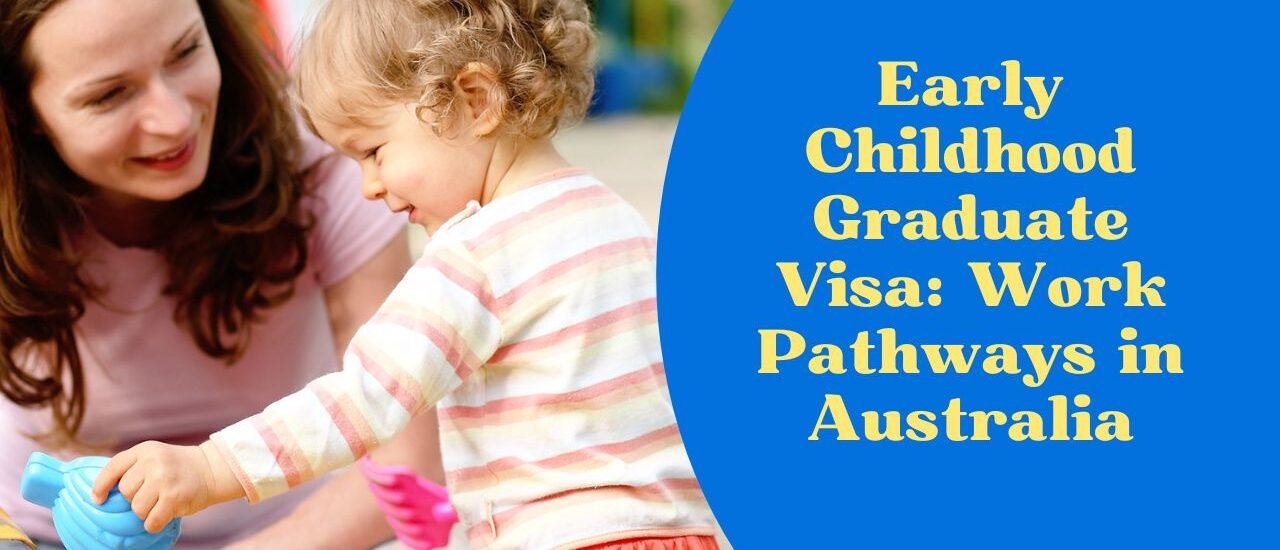
For international students, choosing to study in Australia can influence what happens after graduation. An early childhood graduate visa can provide eligible graduates with opportunities to remain in Australia and gain professional experience after completing their studies.
This GL Campus guide explains graduate work options, regional pathways, occupation considerations, and important eligibility factors for early childhood graduates.
7 Key Early Childhood Graduate Visa Benefits to Understand
Understanding these key benefits helps international students to evaluate early childhood programs effectively before enrolling in top Australian Universities.

1. Post-Study Work Opportunities
Eligible graduates can remain in Australia temporarily after completing an eligible higher education degree. This post-study window enables foreign scholars to gain unrestricted workplace exposure, practice teaching, and build professional networks within Australian early learning centers.
2. Potentially Extended Stay Options
Australian graduate visa rules provide post-study stay periods based on the completed qualification stream, study level, and current regulations:
- Higher education bachelor’s or master’s degrees generally grant a 2-year post-study work stay under standard rules.
- Graduates who study and reside in designated regional areas can qualify for additional post-study visa extensions.
- Department of Home Affairs rules (including the 35-year age cap for most standard subclass 485 streams) must be met at the time of application.
3. Access to Relevant Employment
Graduates gain unrestricted work permissions after completing their studies. This allows them to seek full-time employment as early childhood educators or early childhood teachers (ECTs) across public and private educational settings.
4. Regional Career Opportunities
Regional Australia offers specific advantages for early childhood professionals:
- Strong demand for qualified early childhood educators in regional communities.
- Potential eligibility for an additional 1 to 2-year post-study visa extension through regional study.
- Access to state or territory regional nomination pathways (such as subclass 491 or 494).
5. Skilled Occupation Pathways
Graduates can explore a skilled occupation visa if their qualifications and professional credentials align with Australia’s Medium and Long-term Strategic Skills List (MLTSSL). Early Childhood (Pre-Primary School) Teacher (ANZSCO 241111) is listed as a high-demand occupation, opening prospective avenues for points-tested skilled migration.
6. Graduate Stay Back Rights
Exercising graduate stay back rights gives international graduates dedicated time to transition from classroom theory to professional workforce integration. This post-graduation phase provides the time needed to complete skills assessments, secure local professional references, and establish steady income streams.
7. Potential Long-Term Career Planning
An early childhood graduate visa serves as a strategic foundation within a broader career plan. It provides time to accumulate local Australian work experience, which adds valuable points toward skilled migration assessments or potential employer sponsorship.
Early Childhood Graduate Visa and Study Teaching in Australia
Choosing the Right Early Childhood Qualification
When choosing to study teaching in Australia, students must select a course accredited by the relevant education standards authority (such as ACECQA for early childhood or AITSL for teacher migration assessments).
Key criteria to evaluate include:
- Course level (Bachelor of Early Childhood Education, Master of Teaching, or Graduate Diploma options).
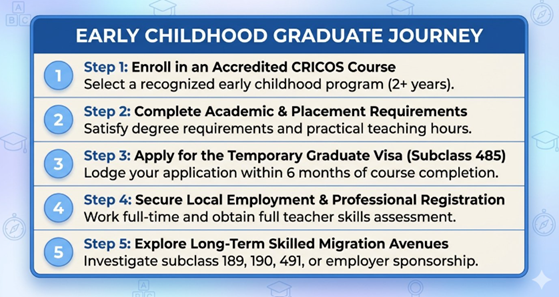
- CRICOS registration status and total course duration (minimum 2 academic years for standard Australian study requirements).
- Supervised professional placement components required for teacher registration.
Early Childhood Education vs General Teaching
Early childhood teaching focuses on children from birth to age 8 (pre-primary settings), whereas primary and secondary teaching involve older age groups. Each sector has distinct registration requirements, skill assessing bodies, and workforce shortages across different states.
Why Course Selection Matters
Enrolling in a course simply because it promises migration outcomes can backfire if the program lacks proper accreditation or fails to satisfy skills assessment prerequisites.
How the Early Childhood Graduate Visa Pathway Can Work
Regional Work Options for Early Childhood Graduates
Why Regional Australia May Matter
Choosing regional universities or taking employment in regional centers can yield distinct practical advantages:
- Higher vacancy rates and demand for qualified early childhood teachers.
- Eligibility for second post-study work streams under subclass 485.
- Regional state nomination priority for skilled regional visas.
Regional Does Not Mean Automatic Migration
While regional locations offer strategic benefits, studying regionally does not guarantee permanent residence. Applicants must still meet all age, points, English proficiency, and skills assessment benchmarks.
Skilled Occupation Visa Options After Graduation
Factors That Can Influence Eligibility
Transitioning from temporary post-study status to a skilled occupation visa (such as subclasses 189, 190, or 491) depends on multiple points factors:
- Age: Maximum points awarded between ages 25 and 32.
- English Proficiency: Superior English test results generate maximum migration points.
- Skills Assessment Outcome: Positive assessment from AITSL.
- Australian Work Experience: 1 to 3 years of local skilled work experience provides extra points.
Why Occupation Lists Matter
Occupation lists are reviewed periodically by Australian authorities. Students should track official immigration updates to confirm that Early Childhood Teacher remains on national and state shortage lists.
Common Mistakes When Planning an Early Childhood Graduate Visa
- Assuming Every Graduate Gets the Same Visa: Subclass 485 eligibility depends on your degree level, stream, age, and application timing.
- Confusing Qualification With Visa Eligibility: Graduating from a university does not automatically issue a visa; a separate application process is required.
- Ignoring Professional Registration Standards: Early childhood teaching roles require state teacher registration and English language levels that differ from baseline visa criteria.
- Relying on Outdated Migration Rules: Visa criteria, age limits, and fees change over time. Always verify criteria on official Department of Home Affairs channels.
How to Prepare Before Applying
- Check Course Accreditation: Confirm your degree meets AITSL and ACECQA professional requirements.
- Audit Age and Timing: Verify you lodge your subclass 485 visa application within 6 months of course completion and before turning 36 (where standard age caps apply).
- Gather Core Documents: Keep academic transcripts, completion letters, Australian Federal Police checks, and health insurance proof ready.
- Maintain English Proficiency: Ensure valid IELTS Academic or equivalent English test results meeting visa and registration criteria.
Is an Early Childhood Graduate Visa Right for You?
An early childhood graduate visa path offers strong prospects for international students genuinely passionate about early childhood education.
However, candidates should evaluate the full framework—balancing tuition costs, English requirements, supervised placement commitments, and long-term career goals—rather than viewing the degree solely as a migration route.
Final Takeaway
Utilizing an early childhood graduate visa allows international graduates to turn an Australian degree into real-world teaching experience. By understanding post-study work rules, regional incentives, and skilled occupation requirements early, students can build a clear, structured pathway for their education and career journey in Australia.
FAQs About Early Childhood Graduate Visa
1. What is an early childhood graduate visa?
An early childhood graduate visa refers to Australian post-study work visa options (typically the Temporary Graduate visa subclass 485) available to eligible international students who complete an accredited early childhood qualification in Australia.
2. Can I stay in Australia after studying early childhood education?
Yes, eligible graduates who complete a CRICOS-registered higher education qualification of at least two years can apply for post-study work rights under subclass 485. Stay periods generally start at two years, with extra time available for regional graduates.
3. Can early childhood graduates apply for skilled migration?
Early childhood teachers (ANZSCO 241111) whose roles are on Australia’s skilled occupation lists can explore points-tested skilled visas (such as subclasses 189, 190, or 491) if they obtain a positive skills assessment from AITSL.
4. Does studying early childhood education guarantee permanent residency?
No, completing an early childhood qualification does not automatically guarantee permanent residency. Applicants must independently satisfy points thresholds, skills assessments, English standards, and state nomination criteria.
5. Are regional areas useful for early childhood graduates?
Regional areas offer significant advantages, including high job demand, priority state migration nominations, and eligibility for a second Temporary Graduate visa extension.