
New Zealand attracts international students with its respected universities, practical learning opportunities, and potential career pathways after graduation. However, choosing the right qualification to study in New Zealand requires more than comparing tuition fees or university rankings.
This GL Campus guide helps in understanding post study work rights, graduate employment opportunities, and skilled migration requirements can help you make a more informed decision about your future.
1. Choosing the Right Degree for New Zealand Career Opportunities
The first step in planning your education is choosing a qualification that aligns with your interests, career goals, and the skills employers need.

Which Degrees Should International Students Consider?
When researching high-demand fields, students often look toward specific sectors:
- Information technology, software development, and data analytics.
- Engineering and selected technical disciplines.
- Healthcare and other professions with specific registration requirements.
- Business, accounting, and supply chain management.
- Agriculture, environmental science, and food technology.
Note: These are areas worth researching, not a guarantee of employment or immigration eligibility. Students should investigate actual vacancies, qualification requirements, and professional registration rules before choosing a program.
Compare Universities, Qualifications, and Career Outcomes
Encourage readers to compare institutions using the following criteria:
- Whether the qualification is recognized within New Zealand’s education framework.
- Course content, practical training, and internship opportunities.
- Tuition fees, living expenses, and location.
- Graduate employment outcomes and industry connections.
The goal is to choose a degree that supports both academic development and realistic career planning.
2. Understanding the Post Study Work Visa NZ
A major consideration for international students is whether their qualification can lead to work rights after graduation.
Who Can Apply for a Post Study Work Visa?
According to Immigration New Zealand, eligibility generally depends on the qualification completed, the level of study, and the time spent studying in the country. Eligible degree-level 7 qualifications and certain level 8 to 10 qualifications may qualify, subject to applicable requirements. Students should not assume that every diploma, online program, or overseas qualification provides post study work rights.
How Long Can Graduates Stay and Work?
Eligible graduates may receive a Post Study Work Visa NZ for up to three years, depending on their qualification and circumstances. For eligible master’s or doctoral qualifications, completing at least 30 weeks of full-time study in New Zealand can support a three-year visa. Other qualifications may have different durations.
Important update for 2026: Immigration New Zealand has announced an extension of eligibility effective from 16 November 2026 for certain level 7 graduate diploma graduates who also hold a bachelor’s degree and meet additional study requirements. The visa duration and conditions depend on the relevant qualification and eligibility rules.
Why You Must Verify Eligibility Before Enrolling
Before paying tuition fees, check the exact qualification against official visa eligibility requirements. Confirm the required study duration, whether the course must be completed in New Zealand, and whether the qualification sits on an eligible list where applicable.
3. How Your Degree Connects to Skilled Migration Pathways
Studying in New Zealand may help build a foundation for future residence, but a student visa or post study work visa does not automatically lead to permanent residence.
Understanding the Skilled Migrant Category
Immigration New Zealand features structured pathways under the Skilled Migrant Category (SMC), including the points-based pathway, the Skilled Work Experience pathway, and the Trades and Technician pathway. Applicants must meet relevant criteria for one pathway, including applicable employment, qualification, income, and experience requirements. The most suitable route depends on a person’s occupation, qualifications, work history, and employment circumstances.
Parry Field Lawyers+ 1
Why Qualification Level Matters
A degree can contribute to eligibility under some residence pathways, but the number of points or type of qualification accepted varies. For example, eligible New Zealand qualifications may receive different points from comparable overseas qualifications. Overseas qualifications may require an International Qualification Assessment (IQA) unless an exemption applies.
Changes Students Should Monitor in 2026
It is vital to check policy updates before selecting a course. Immigration New Zealand introduced significant Skilled Migrant Category updates taking effect on 24 August 2026, featuring additional residence pathways and updated qualification evidence requirements. Readers should use current official criteria rather than relying on older blog posts or claims that a specific degree guarantees residence.
Immigration New Zealand
4. Finding International Graduate Jobs in New Zealand
Graduation is an important milestone, but securing relevant work requires preparation, research, and an understanding of employer expectations.
Where to Search for Graduate Opportunities
Recommend researching established job platforms, employer career pages, university career services, graduate recruitment programs, and professional networking events. Students should also investigate whether their chosen occupation requires professional registration or specific local qualifications.
How to Make Your Graduate Application Stronger
Encourage students to build a New Zealand-style CV, develop interview skills, and gain relevant experience through eligible internships or practical projects. Highlight the value of communication, teamwork, problem-solving, and demonstrable technical skills.
Why Location and Industry Matter
Employment opportunities differ by region and industry. Students should compare actual job listings, salary expectations, living expenses, and transport options rather than assuming that a particular city guarantees employment.
5. Seven Practical Steps to Improve Your Study and Career Plan
This section provides an actionable checklist for readers preparing to study in New Zealand.
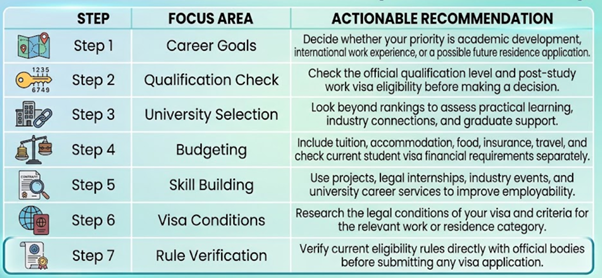
6. Common Mistakes to Avoid When Planning Your Future
Students can make better decisions by understanding the difference between educational opportunities and immigration eligibility.
- Assuming Every Degree Leads to a Work Visa: Not every qualification provides post study work rights. Verify the exact course and its eligibility before enrolling.
- Choosing a Degree Only for Migration Purposes: A qualification should match your abilities, interests, and realistic career opportunities. Immigration policies change, so avoid relying on a single predicted pathway.
- Ignoring Employment and Registration Requirements: Some professions require additional licensing, registration, or supervised practice. Investigate these requirements before choosing a university or specialization.
- Relying on Outdated Immigration Information: Always check official Immigration New Zealand guidance before making decisions about visas, employment, or residence.
7. Is Studying in New Zealand a Good Investment?
The value of an international degree depends on its cost, academic quality, career relevance, and the student’s long-term goals.
Weigh the Costs Against Potential Benefits
Consider tuition fees, living expenses, possible student employment, and the time required to complete the qualification. Compare these costs with the degree’s relevance to your intended career.
Think Beyond Graduation
A successful education plan considers more than the first job after university. Professional development, networking, relevant work experience, and further training can all influence career progression. For students who study in New Zealand, the strongest strategy is to select a suitable qualification, understand visa conditions, and prepare for the employment market well before graduation.
Conclusion
New Zealand can offer international students valuable academic and professional opportunities. However, choosing the right degree requires careful consideration of qualification quality, post study work rights, graduate employment prospects, and possible residence pathways.
Before making a decision, verify your course eligibility, research employers in your intended industry, and review the latest immigration rules. A well-researched plan can help you approach your education with greater confidence while keeping your future options realistic.
Frequently Asked Questions
Is studying in New Zealand worth it for international students?
It can be worthwhile for students seeking recognized qualifications, practical learning, and international experience. The value depends on tuition fees, living costs, career goals, and employment prospects. Research the full financial commitment before choosing a course.
How long can I stay in New Zealand after graduation?
Eligible graduates may receive a Post Study Work Visa for up to three years, depending on their qualification and circumstances. Some qualifications offer shorter periods or have additional eligibility requirements. Always check current Immigration New Zealand rules.
Does studying in New Zealand guarantee permanent residency?
No. Completing a degree does not automatically qualify someone for permanent residence. Applicants must meet the criteria of an applicable residence category, which may include skilled employment, qualifications, income, and work experience.
Which degree is best for skilled migration pathways in New Zealand?
There is no single degree that guarantees eligibility. The most suitable qualification depends on your occupation, skills, career goals, and applicable immigration criteria. Research current residence pathways and professional registration requirements before enrolling.
Can I get a job in New Zealand after completing my degree?
Yes, international graduates may find employment if they meet employer requirements and hold necessary work rights. Opportunities depend on industry demand, experience, location, and individual skills. A strong CV, networking, and practical experience can improve your prospects.