For international students, study in New Zealand can be more than an academic experience. It can create a pathway toward professional employment and, for eligible graduates, longer-term residence options. New Zealand currently offers post-study work options for eligible graduates, while skilled residence pathways depend on factors such as qualifications, occupation, work experience, pay, and accredited employer job offers.
The GL Campus guide crucial question is what happens after graduation and how students can align their qualifications with their long-term career aspirations.
How the New Zealand Study to Work Journey Works
Transitioning from international student status to a working professional follows a structured sequence:

Step 1: Choose a Recognized Qualification
Selecting the right qualification level is critical. Immigration New Zealand requires degree Level 7 or higher qualifications to include at least 30 weeks of full-time study in New Zealand for standard Post Study Work Visa NZ eligibility.
Step 2: Graduate Successfully
Students must complete the qualification associated with their student visa while maintaining valid immigration compliance throughout their academic journey.
Step 3: Move Into the Appropriate Work Visa
Eligible graduates can transition onto post-study work options, securing valuable open work rights to enter the local job market.
Understanding the Post Study Work Visa NZ
The post study work visa NZ pathway allows eligible international graduates to stay and work in New Zealand for up to three years.
Who Can Qualify for a Post Study Work Visa?
- Degree Level 7 Qualifications: Bachelor’s degrees studied full-time in New Zealand for at least 30 weeks.
- Level 8 to Level 10 Qualifications: Postgraduate Diplomas and Master’s degrees providing open work conditions.
- Eligible Non-Degree Qualifications: Certain Level 5 to 7 qualifications specified on Immigration New Zealand’s eligible qualifications list.
- Full-Time Study Requirements: Must meet strict duration and campus presence conditions.
Graduates with degree Level 7 or higher qualifications generally receive open work rights, allowing them to work for virtually any employer in any legal role.
New Graduate Work Options Coming in November 2026
Immigration policies are evolving to offer flexible transitional options. From 16 November 2026, Immigration New Zealand is introducing updated post-study work regulations.
From 16 November 2026, eligible graduates holding certain NZQCF Level 5 to 7 qualifications can apply for a new Short-Term Graduate Work Visa offering up to six months of open work rights.
Who May Benefit From the New Graduate Visa?
- Completion of an eligible Level 5, 6, or 7 qualification
- Minimum 24 weeks of full-time study completed in New Zealand
- Recent student visa history (applying within 3 months of visa expiry)
- Maintenance funds of at least NZD $5,000
This new 6-month open work visa gives non-PSWV-eligible graduates time to secure employment and transition onto employer-sponsored work visas.
Graduate Diploma Changes
From 16 November 2026, Post Study Work Visa NZ eligibility will also expand to certain Level 7 Graduate Diploma graduates who already hold a bachelor’s degree awarded in New Zealand or overseas.
Finding International Graduate Jobs After Graduation
Securing relevant employment is a primary objective for international graduates aiming to build long-term career momentum.
Where to Find Graduate Opportunities
- Corporate career portals and university employment boards
- Dedicated graduate recruitment programs and internships
- Professional networking platforms like LinkedIn
- Industry networking events and career expos across major New Zealand cities
- Specialized recruitment agencies and platforms (Seek, TradeMe Jobs)
Skills Employers Look For
In addition to technical qualifications, New Zealand employers prioritize core workplace competencies:
- Clear professional communication skills
- Adaptive problem-solving and critical thinking
- Digital literacy and relevant technological tools
- Project management and teamwork capabilities
- Demonstrated leadership potential and industry awareness
Preparing your professional profile early ensures a seamless transition into international graduate jobs.
How Your Qualification Can Influence Migration Pathways
Your qualification serves as a foundation for broader migration pathways. New Zealand offers skilled residence frameworks designed to retain global talent.
Skilled Migrant Category
The Skilled Migrant Category (SMC) operates on a points-based system requiring a skilled job or job offer from an accredited New Zealand employer. The current SMC framework includes:
- Points-Based Pathway: Points awarded for New Zealand occupational registration, higher education qualifications, or high income.
- Skilled Work Experience Pathway: Specialized routes for roles requiring structured post-qualification experience.
- Trades and Technicians Pathway: Pathways tailored for qualified technical professionals.
Green List Pathway
The Green List targets critical skill shortages across New Zealand:
- Tier 1 Roles (Straight to Residence): Eligible professionals can apply directly for residence upon receiving a qualifying job offer.
- Tier 2 Roles (Work to Residence): Eligible professionals can apply for residence after completing two years of qualifying work experience in New Zealand.
Choosing Your Course With Future Migration in Mind
Aligning your educational planning with official immigration guidelines minimizes unexpected regulatory barriers.
Check the Occupation
Research whether your desired career path corresponds with roles listed on the Green List or skilled shortage frameworks.
Check Qualification Requirements
Certain professional roles require specific accredited degrees, mandatory occupational registration, or clinical practice standards before employment can commence.
Check Future Visa Rules
Always consult official Immigration New Zealand announcements. Policy settings change, making up-to-date information vital—especially with the November 2026 graduate work updates taking effect.
7 Smart Strategies for a Successful Study in New Zealand Journey
- Start With Your Career Goal: Identify your target profession first, then select accredited qualifications that fulfill industry requirements.
- Research the Industry: Analyze regional labor demand, average compensation benchmarks, and employer hiring trends.
- Build Experience While Studying: Utilize student work rights to gain part-time industry experience and build professional contacts.
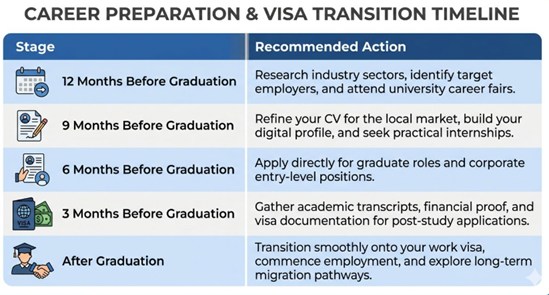
- Prepare for Graduate Recruitment Early: Draft a New Zealand-style CV, optimize your LinkedIn presence, and practice interview strategies well before graduation.
- Understand Your Post-Study Options: Confirm visa eligibility, document requirements, and processing timelines six months prior to degree completion.
- Monitor Immigration Updates: Stay informed through official Immigration New Zealand channels to track rule adjustments.
- Keep a Backup Career Strategy: Prepare alternative employment options and professional routes rather than relying solely on a single visa pathway.
Common Mistakes International Students Should Avoid
- Choosing a program without evaluating long-term employment outcomes.
- Assuming every course automatically grants open post-study work rights.
- Delaying job application efforts until student visa expiration approaches.
- Overlooking mandatory professional registration or licensing conditions.
- Confusing temporary post-study work rights with permanent residence eligibility.
- Relying on outdated advice instead of current Immigration New Zealand regulations.
Your 12-Month Career Preparation Plan
Is Study in New Zealand a Good Route for International Students?
Enrolling in New Zealand higher education provides world-class instruction, valuable international work experience, and structured access to skilled residence pathways for qualifying candidates.
Career outcomes depend on qualification level, academic performance, industry demand, and the specific immigration policies active at application. The introduction of updated graduate work options in November 2026 adds further choices for incoming students.
Final Checklist Before You Study in New Zealand
- Select an accredited New Zealand education provider
- Verify the exact NZQCF qualification level
- Confirm post-study work visa eligibility for your chosen program
- Research high-demand occupations and Green List classifications
- Target prospective graduate employers in your discipline
- Review current Skilled Migrant Category requirements
- Check official Immigration New Zealand updates
- Outline a proactive career transition timeline before departure
Conclusion
Choosing to study in New Zealand offers international students a strategic combination of high-quality education, practical work rights, and long-term career growth. By aligning your qualification with industry needs, understanding visa conditions, and planning early, you can convert your educational journey into a flourishing international career.
FAQs About Study in New Zealand
1. Can international students work after completing their studies in New Zealand?
Eligible graduates can apply for a Post Study Work Visa NZ allowing open employment for up to three years depending on qualification level. From 16 November 2026, additional short-term work options will also open for qualifying Level 5 to 7 graduates.
2. How long is the post study work visa NZ?
Visa duration varies from 1 to 3 years depending on your qualification. Bachelor’s degree (Level 7), Master’s (Level 9), and Doctoral (Level 10) graduates can receive up to three years, while Postgraduate Diplomas generally qualify for one year.
3. Can studying in New Zealand lead to permanent residence?
Graduation itself does not automatically guarantee permanent residence. However, eligible graduates who secure skilled employment can pursue residence under pathways like the Skilled Migrant Category or the Green List.
4. What are the new graduate work options in New Zealand in 2026?
Starting 16 November 2026, a new Short-Term Graduate Work Visa provides up to six months of open work rights for eligible Level 5 to 7 graduates. Additionally, eligibility for the Post Study Work Visa expands to certain Level 7 Graduate Diploma holders who possess a prior bachelor’s degree.
5. Which migration pathways can international graduates explore?
Graduates with qualifying job offers can explore the Skilled Migrant Category (points-based, work experience, or trades options) or the Green List framework (Tier 1 Straight to Residence or Tier 2 Work to Residence).