
A BBA credit transfer helps eligible students apply previously earned academic credentials toward a Bachelor of Business Administration degree. Instead of repeating foundational subjects you have already mastered, a formal evaluation can grant module exemptions or advanced entry into higher academic years.
For business diploma holders and transfer students, this GL Campus guide helps in understanding how credit transfer policies operate can significantly accelerate your path toward graduation while lowering overall tuition costs.
How Does BBA Credit Transfer Work?

Step 1: Submit Your Previous Qualification
Applicants submit their formal academic records, including detailed transcripts, graduation certificates, and comprehensive course syllabi containing learning outcomes for each module completed.
Step 2: University Reviews Your Credits
The university’s academic department compares your prior coursework against their current BBA curriculum to check for alignment in content, rigor, and learning objectives.
Step 3: Receive a Credit Assessment
The institution issues an official credit evaluation report detailing exactly which courses qualify for credit recognition and how many credits apply toward the degree.
Step 4: Begin the BBA at the Approved Entry Level
Once accepted, you enroll directly into the approved semester or year, enabling you to focus exclusively on remaining higher-level business modules.
7 Factors That Determine BBA Credit Transfer Eligibility
1. Previous Qualification
The level and structure of your prior credential heavily influence transfer eligibility. Accredited diploma programs, associate degrees, and university-level courses align much more easily with a BBA credit transfer than unaccredited vocational certificates.
2. Subject Similarity
Universities require a strong match (typically 70% to 80% syllabus overlap) between your previous module content and their corresponding BBA course learning outcomes.
3. Credit Value
The module must carry equal or greater credit weight compared to the destination course. For instance, a 3-credit business law course cannot fully replace a 4-credit module without supplemental study.
4. Academic Grades
Most institutions establish minimum grade thresholds (such as a Grade C or 2.0 GPA equivalent) for a module to qualify for BBA credit transfer.
5. Accreditation and Recognition
Your previous institution must hold recognized institutional accreditation from relevant national higher education bodies or international quality agencies.
6. Recency of Study
Because business environments and technology evolve rapidly, coursework completed within the past 3 to 5 years is far more likely to qualify for credit recognition than older studies.
7. University Transfer Policies
Every higher education institution maintains its own academic regulations regarding maximum transfer caps, residency rules, and core course restrictions.
What Is Advanced Standing BBA?
An advanced standing BBA entry allows qualified students to skip initial introductory semesters and join a degree program in Year 2 or Year 3 based on recognized prior learning.
How Advanced Standing Can Reduce Repeated Study
Securing advanced standing eliminates redundant foundational coursework. Instead of repeating introductory principles of management or microeconomics, you progress directly to advanced corporate strategy, international trade, and specialized electives.
Is Advanced Standing the Same as Skipping the Degree?
No. Advanced standing recognizes that you have already satisfied specific academic requirements elsewhere. You must still fulfill all remaining graduation requirements, core capstones, and credit minimums established by the awarding university.
Diploma to Bachelor Pathway Explained
A diploma to bachelor pathway provides a structured academic bridge for diploma graduates to convert their existing qualifications into a full bachelor’s degree.
Why Diploma Holders Consider This Route
- Prevents Study Repetition: Maximizes the academic credit of work already completed.
- Accelerated Time to Graduation: Cuts down total time spent in full-time study.
- Cost Efficiency: Reduces overall tuition, campus fees, and living expenses.
- Enhanced Career Credentials: Elevates a diploma qualification into an internationally recognized bachelor degree.
Can Credit Transfer Make a Fast Track BBA Possible?
Utilizing a BBA credit transfer is the most effective way to complete a fast track BBA. By securing maximum credit recognition, eligible candidates can complete their remaining degree requirements in a significantly condensed timeframe.
What Determines the Remaining Study Time?
- Total Accepted Credits: The number of transfer units officially approved by the faculty.
- Core Course Requirements: Specific mandatory core modules that must be taken in-residence.
- Semester Structure and Load: Availability of trimester schedules or intensive summer blocks.
- Study Mode: Full-time enrollment vs flexible part-time or online delivery options.
Why Fast Does Not Always Mean Better
While completing your degree quickly is advantageous, verify that your chosen institution maintains top-tier accreditation, strong academic support, rigorous coursework, and global employer recognition.
Documents Required for BBA Credit Transfer
How Much Time and Money Can Credit Transfer Save?
Executing a BBA credit transfer targets two major student concerns: time commitment and overall financial investment.
Potential Time Savings
Receiving advanced standing for 30 to 60 credit hours can reduce standard 4-year degree requirements down to 2 or 2.5 years, allowing you to enter the job market much faster.
Potential Cost Savings
Fewer required modules translate directly into lower total tuition fees, reduced textbook expenses, and savings on campus commuting or housing costs.
Calculate Your Potential Savings
POTENTIAL STUDY SAVINGS FORMULA
Potential Study Savings = Standard BBA Credits Required
minus Accepted Transfer Credits
Example: If a standard BBA requires 120 credits and the university accepts 45 transfer credits, you only need to complete and pay for 75 remaining credits.
Common Mistakes Students Make With BBA Credit Transfer
- Assuming All Credits Transfer Automatically: Credit transfer is evaluated on a subject-by-subject basis and is never guaranteed without formal evaluation.
- Submitting Incomplete Documentation: Applying without detailed course syllabi or learning outcomes often leads to rejected transfer requests.
- Focusing Solely on Duration: Choosing a school purely for maximum credit acceptance without verifying regional or global program accreditation.
- Overlooking Maximum Transfer Limits: Many universities limit transfer credits to a maximum of 50% or 60% of total degree requirements due to residency policies.
How to Maximize Your BBA Credit Transfer Opportunities
- Gather Documents Early: Request official sealed transcripts and comprehensive syllabus outlines well before admission deadlines.
- Map Previous Coursework: Compare your completed course list against the destination university’s core curriculum to identify obvious module matches.
- Request a Written Evaluation: Always secure a formal written credit transfer assessment from the admissions team prior to paying tuition deposits.
Is BBA Credit Transfer Right for You?
It May Suit Students Who:
- Hold a business-related diploma, associate degree, or incomplete university credit hours.
- Want to complete a bachelor’s degree efficiently without re-taking introductory topics.
- Aim to minimize total educational expenditures while maintaining high academic quality.
When You May Need Additional Assessment:
- Your previous studies were completed in an unrelated academic discipline.
- Your qualifications were earned more than 5 to 7 years ago.
- Your former institution used a vastly different grading or credit unit structure.
Final Thoughts
A BBA credit transfer transforms past academic efforts into a clear head start toward earning a full bachelor’s degree. By taking advantage of advanced standing policies and diploma pathways, you can streamline your business education, minimize financial investment, and earn an industry-recognized qualification on a schedule that fits your career goals.
FAQs About BBA Credit Transfer
1. What is BBA credit transfer?
A BBA credit transfer is the formal academic process where a university evaluates your previously completed college or diploma coursework to award equivalent degree credits, allowing you to skip duplicate introductory modules in a Bachelor of Business Administration program.
2. Can a business diploma reduce the duration of a BBA?
Yes, holding a relevant business diploma from an accredited institution can significantly reduce your degree timeline. If the university grants advanced standing based on syllabus overlap, you can enter directly into the second or third year of the BBA program.
3. What documents are needed for BBA credit transfer?
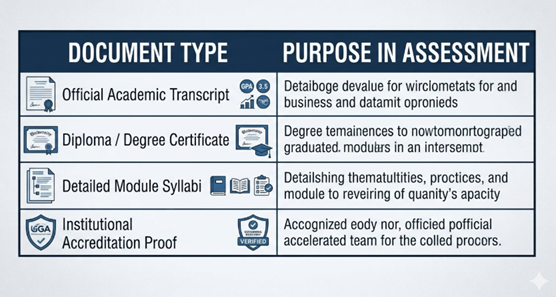
You typically need official academic transcripts, certified diploma certificates, detailed module descriptions or course syllabi detailing learning outcomes, and official proof of accreditation from your prior educational institution.
4. Is advanced standing available for every BBA program?
No, advanced standing policies vary by university and depend on institutional regulations, regional accreditation rules, and curriculum alignment between your previous studies and the target BBA program.
5. Can credit transfer make a BBA faster and cheaper?
Yes, securing a BBA credit transfer reduces the total number of modules you must complete, which directly decreases overall tuition expenses and shortens the total time needed to satisfy graduation requirements.