
Choosing an Australian university for teaching degree is a major career decision, especially for students passionate about guiding young children during their most formative years. Swinburne early childhood education offers an accredited study pathway designed to combine foundational academic learning with practical teaching skills.
Whether you are a high school graduate, an international applicant, or a career changer, this GL Campus guide will help you in evaluating course structures, industry placements, entry criteria, and career outcomes is essential before applying to Swinburne University.
What Is Swinburne Early Childhood Education?
The Swinburne early childhood education program provides professional teacher preparation focused on early learning development, curriculum design, and classroom management for children from birth to age eight.
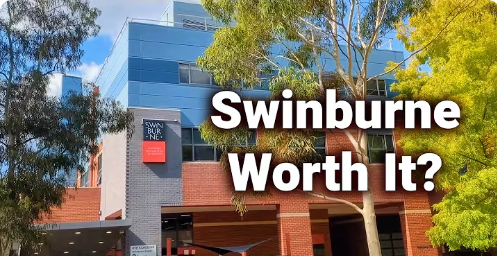
Understanding the Early Childhood Bachelor
An early childhood bachelor equips prospective educators with evidence-based strategies to support early learning:
- Developmental Science: Analyzing physical, cognitive, social, and emotional growth in early childhood.
- Play-Based Pedagogy: Designing child-centered environments that foster curiosity and problem-solving.
- Inclusive Education: Supporting diverse learning needs, neurodiversity, and cultural backgrounds.
Who Is This Degree Designed For?
- School Leavers: Students seeking a direct university route into early childhood teaching.
- Career Changers: Professionals transitioning into education from healthcare, social work, or admin.
International Students: Overseas learners seeking an accredited Australian qualification in education.
Swinburne Early Childhood Education Course Structure
The curriculum balances theoretical knowledge with hands-on application across core focus areas.
Year 1: Child Development, Educational Theories, & Inclusive Learning
↓
Year 2: Curriculum Planning, Literacy, Numeracy, & Creative Arts
↓
Year 3: Advanced Pedagogy, Leadership, & Professional Placements
Child Development and Learning
Students examine fundamental concepts in child psychology, neurodevelopment, and wellbeing:
- Early cognitive development and language acquisition
- Social-emotional health and behavior guidance
- Inclusive learning strategies for children with extra needs
Curriculum and Teaching Practice
Learning extends into active lesson design and learning environment setup:
- Literacy and Numeracy: Building early language, storytelling, and foundational math concepts through play.
- STEM in Early Years: Encouraging scientific inquiry and exploration in early learning settings.
- Arts and Expressive Play: Utilizing music, drama, and visual arts to support holistic development.
Practical Learning and Industry Placements
Supervised professional experience forms a core part of early childhood teacher preparation in Australia.
University Coursework (Theory & Strategy)
↕
Supervised Professional Experience (Supervised Centre Placement)
↓
Professional Teacher Readiness (VIT & ACECQA Registration)
Why Industry Experience Matters
Supervised placements allow pre-service teachers to apply theoretical models directly inside licensed early learning centers, kindergartens, and preschools under the guidance of experienced mentors.
What Students Can Learn During Placements
- Managing daily room routines and learning spaces safely
- Observing and documenting child development progress
- Building professional relationships with families and staff teams
- Implementing framework-aligned learning plans (EYLF)
Why Consider Swinburne Early Childhood Education?
Evaluating the distinct features of this degree helps prospective applicants make an informed university choice.
┌─ Balanced Curriculum (Theory + Placements)
├─ Accredited Pathway (ACECQA recognized)
WHY CHOOSE SWINBURNE ┼─ Flexible Study Formats (On-campus or online options)
└─ Modern Campus Facilities (Supportive learning hubs)
Combination of Theory and Practice
Coursework aligns directly with national quality standards, ensuring graduates develop both academic understanding and practical classroom capability.
Preparation for an Australian Teaching Career
Completing an accredited early childhood bachelor fulfills the academic requirements needed to register as a qualified early childhood teacher across Australia.
University Learning Environment
Swinburne University provides accessible learning technology, dedicated academic support services, and active student networks to assist learners throughout their studies.
Entry Requirements for the Early Childhood Bachelor
Admission prerequisites vary depending on student background and prior study.
Academic Requirements
Applicants generally require a recognized high school diploma (ATAR score or equivalent) or a completed relevant VET/TAFE qualification (such as a Diploma of Early Childhood Education and Care).
English Language Requirements
International applicants must demonstrate proficiency through recognized tests such as IELTS Academic (typically an overall band score of 6.5 to 7.0 depending on registration rules) or equivalent assessments.
Additional Requirements
Teaching programs across Australia usually require non-academic assessments (such as the CASPer test), working with children checks, and police record checks prior to placement enrollment.
Fees and Other Study Costs
Planning an education budget requires factoring in tuition alongside additional practical expenses.
Total Investment = Tuition Fees + Placement Expenses + Learning Materials + Living Costs
Tuition Fees
Fees differ based on student residency status:
- Domestic Students: Commonwealth Supported Places (CSP) offer government-subsidized tuition rates.
- International Students: Full-fee tuition applies, billed per study period or unit credit.
Additional Expenses
- Textbook and digital resource access
- Working with Children Check (WWCC) processing fees
- Travel and accommodation costs during block placements
Career Opportunities After Swinburne Early Childhood Education
Graduating with an accredited early learning qualification opens diverse professional pathways.
┌─ Early Childhood Teacher (Preschool / Kindergarten)
├─ Early Learning Centre Director / Manager
GRADUATE CAREER PATHWAYS ────┼─ Educational Leader / Curriculum Coordinator
└─ Early Childhood Policy & Advocacy Specialist
Early Childhood Teacher
Qualified teachers design and deliver educational programs in long day care centers, preschools, and sessional kindergartens.
Early Learning Professional
Graduates can progress into leadership positions, managing center operations, staff mentorship, and regulatory compliance.
Further Career Development
An accredited bachelor’s degree provides a strong foundation for future postgraduate study in educational leadership, special education, or research.
Swinburne Early Childhood Education for International Students
Australia remains a top destination for international education students due to its regulated quality frameworks.
Key Checklist for Overseas Applicants
- Visa Compliance: Ensure enrollment meets Australian student visa study load conditions.
- English Readiness: Meet both university entry and teacher registration language standards.
- Placement Readiness: Complete local background checks prior to practical placements.
- Post-Study Options: Check graduate visa eligibility rules following degree completion.
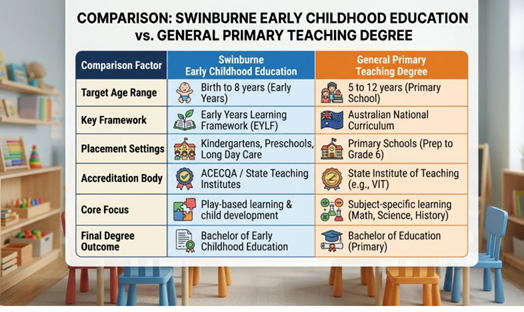
Swinburne Early Childhood Education vs Other Australian Teaching Degrees
Is Swinburne Early Childhood Education Right for You?
Consider this program if you:
• Have a genuine interest in early childhood development and child wellbeing.
• Prefer a study structure that combines academic theory with practical placement blocks.
• Want to earn a qualification recognized by national early learning accreditation bodies.
7 Things to Check Before Applying
- Course Outline: Confirm that unit choices align with your educational interests.
- Placement Requirements: Understand the total hours and block schedules needed for field experience.
- Entry Pathways: Check whether your previous qualifications offer credit transfer options.
- Professional Accreditation: Confirm current accreditation with ACECQA and relevant state registration boards.
- Budget Planning: Calculate total tuition fees and living costs across all study years.
- Entry Assessments: Prepare for required non-academic suitability evaluations.
- Direct Verification: Always verify current program structures and intake dates directly with Swinburne University.
Final Verdict
Enrolling in Swinburne early childhood education provides a structured, practice-oriented path into a critical educational sector. By evaluating the curriculum, placement structure, entry requirements, and total costs, prospective students can confidently choose the right study route for their professional future.
Frequently Asked Questions
1. What is Swinburne early childhood education?
It is a university degree program at Swinburne University focused on preparing educators to work with children from birth to age eight. The course combines academic study in child development with supervised practical placements in early childhood settings.
2. Is this early childhood bachelor accredited in Australia?
Accredited early childhood teaching programs in Australia are designed to meet standards set by the Australian Children’s Education and Care Quality Authority (ACECQA) and state teaching regulatory bodies. Prospective students should check current accreditation status before enrolling.
3. Does the course include practical industry placements?
Yes, practical learning is a key requirement of Australian early childhood teacher education. Students complete supervised placements in licensed early learning centers and kindergartens to gain hands-on teaching experience.
4. What career roles can graduates pursue?
Graduates can work as qualified early childhood teachers, kindergarten teachers, center directors, educational leaders, or early childhood curriculum coordinators, subject to meeting state registration requirements.
5. How can I compare Swinburne with other universities offering an Australian teaching degree?
Compare factors such as course structure, placement arrangement, campus locations, tuition fees, delivery flexible options (online vs. on-campus), and student support services to determine which university best fits your personal goals.